

On November 14, 1960, a full six and a half years after segregation of public schools became illegal in the United States, six-year-old Ruby Bridges was escorted by federal marshals into William Frantz Elementary in New Orleans to become the first Black student allowed at her school. This is famously the story that serves as the national narrative for the first public school desegregation in New Orleans. However, on that same day, two miles away at McDonogh 19, three other six-year-old girls—Leona Tate, Gail Etienne, and Tessie Prevost—took the same brave journey at their own school, becoming integral to the narrative of that powerful day in American history.
_____________________________________
There’s a particular kind of quiet that settles in a space where history was made. It’s not silence exactly, but a weight, a sense that the walls aren’t just brick and glass; they’re witnesses. That’s how it feels stepping inside the old McDonogh 19 Elementary School in the Lower Ninth Ward. Nearly a century old and layered with stories of courage, protest, community, and change, it stood empty for years after sustaining damage from Hurricane Katrina, its legacy all but forgotten by passersby.
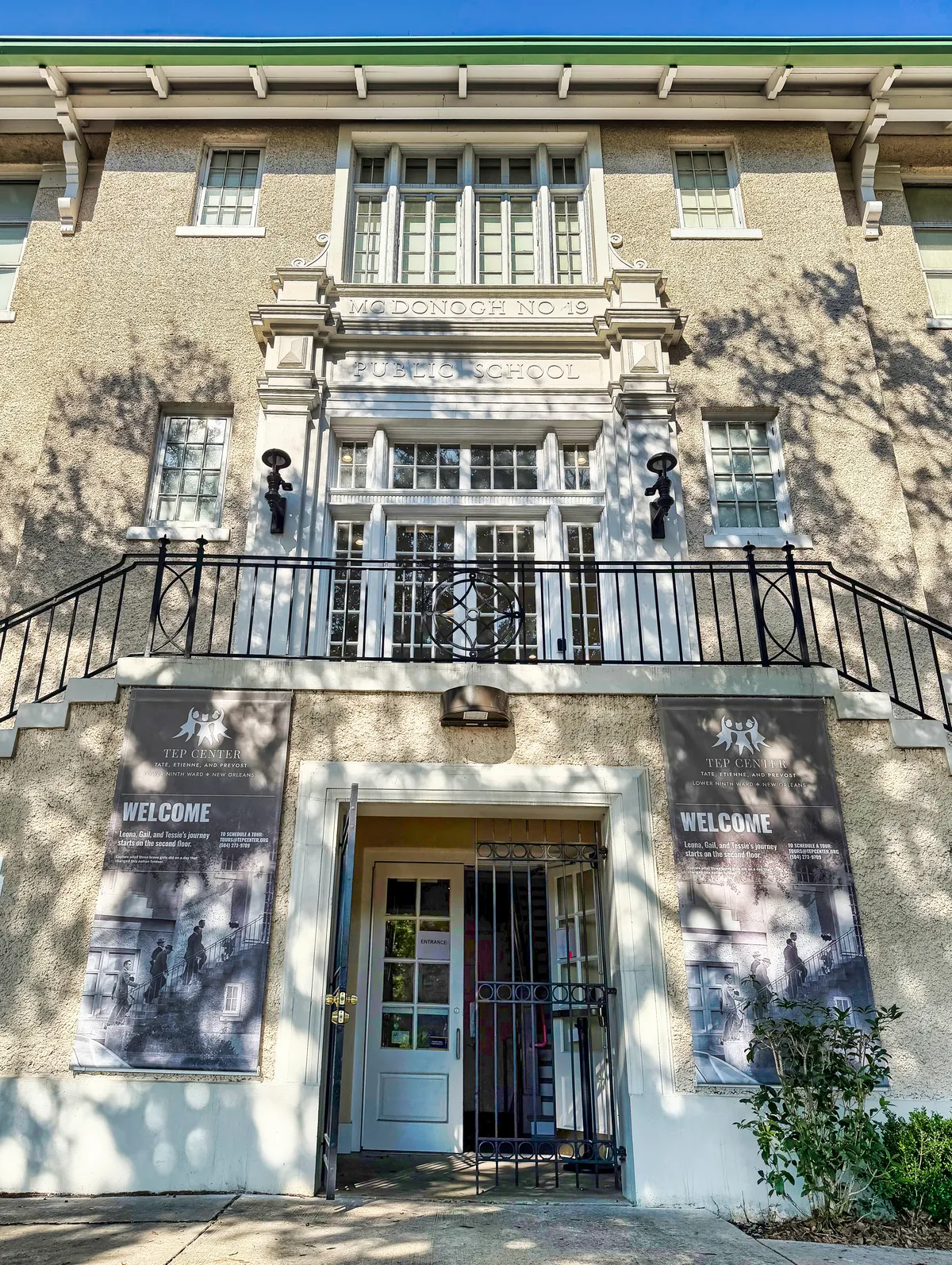
But in 2009, Dr. Leona Tate (yes, that Leona Tate) founded the Leona Tate Foundation for Change, Inc. (LTFC) with the intention of restoring the historic property and giving it renewed purpose. In early 2020, LTFC-Alembic, a development partnership created for the project, purchased the property. Two years later, the community celebrated as McDonogh 19 reopened as the Tate, Etienne, and Prevost Center, a safe space for community and education built on anti-racist principles.
Since then, Dr. Tate and community members have been working hard toward funding and building the dreams she has for this space. Today, the McDonogh 19 building is alive again as a new institution dedicated to teaching and engaging visitors in the history of civil rights in New Orleans. At the heart of its newest chapter is a permanent museum exhibit, “The Principal’s Office.” This installation does something unexpected: it invites every visitor to physically walk the same path that the three little girls walked in 1960, when they became the first Black students to integrate this formerly all-White public school.

“A Walk in Our Shoes”
At Downtown FabWorks, we love immersive builds—especially museum exhibits that focus on translating lived history into a physical experience that engages empathy and reflection. For years, the story of the McDonogh Three lived in archives, oral histories, and the memories of those who witnessed these moments of change during the Civil Rights Movement. Now it lives in the footsteps visitors take from the front steps of the school to the principal’s office, retracing the little girls’ journey under the protection of federal marshals through the shouted slurs and threats of protestors, and the flash and chaos of press coverage.
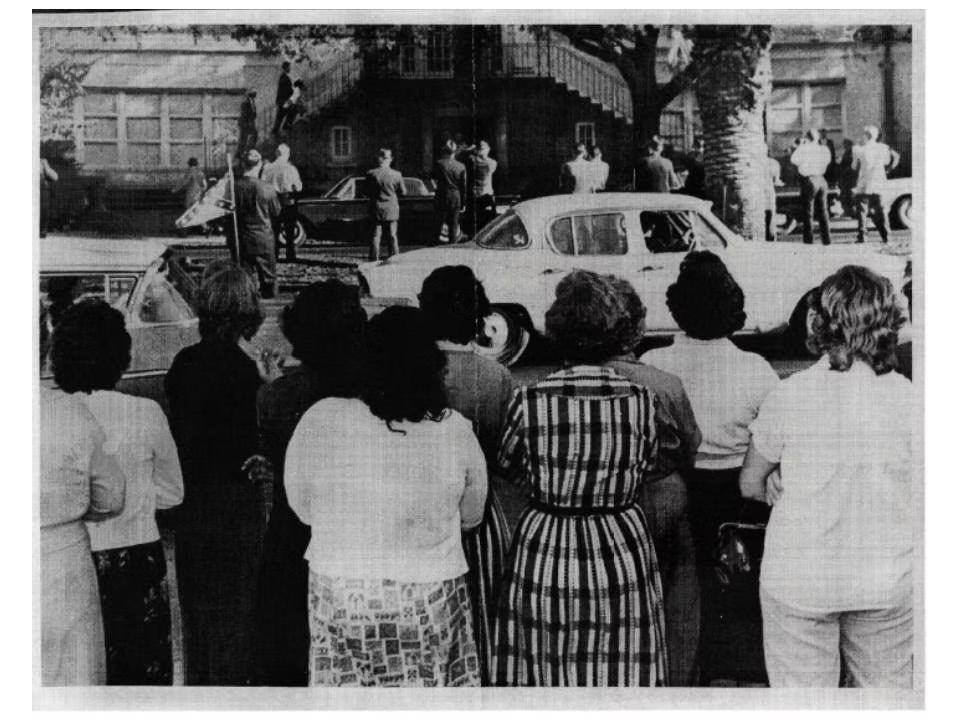
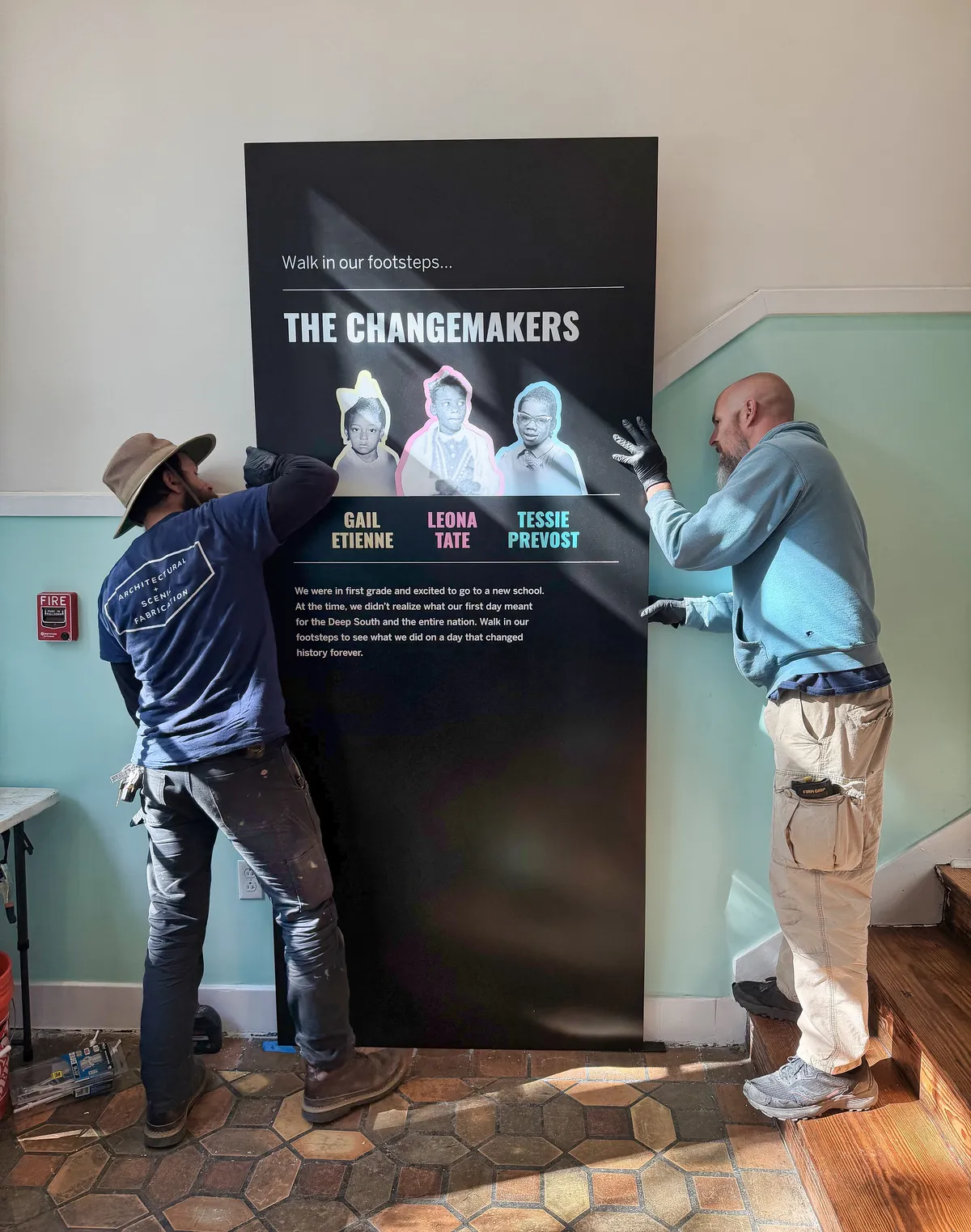
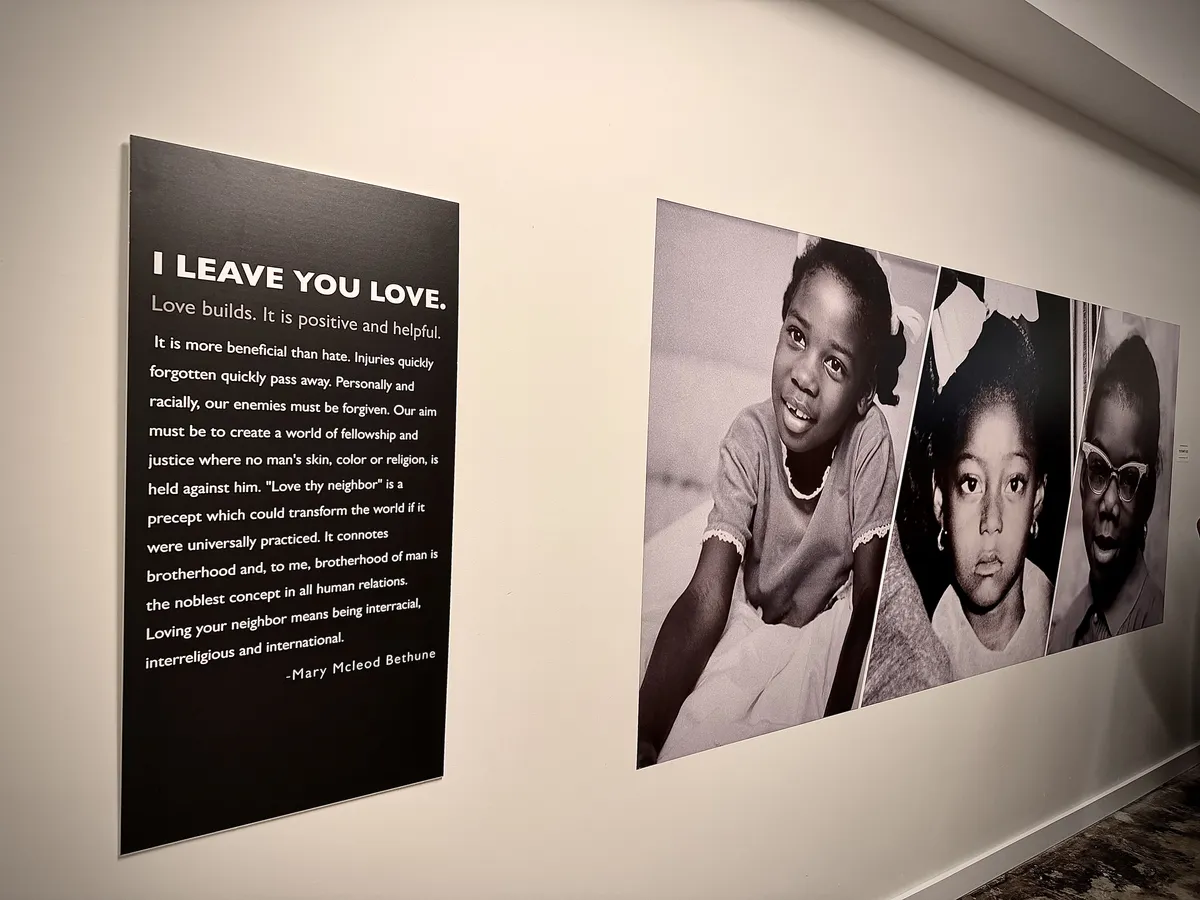
This installation invites people to take “A Walk in Our Shoes” because it’s meant to do more than tell a story…it’s meant to place you in the perspective of the McDonogh Three. Large exterior banners greet you out front with archival imagery that set the tone, contextualizing the world these children stepped into. Inside, glass window graphics and interior panels carry 1960s-era photographs, quotes, and press coverage that immerse you in the emotional and social landscape of the day.
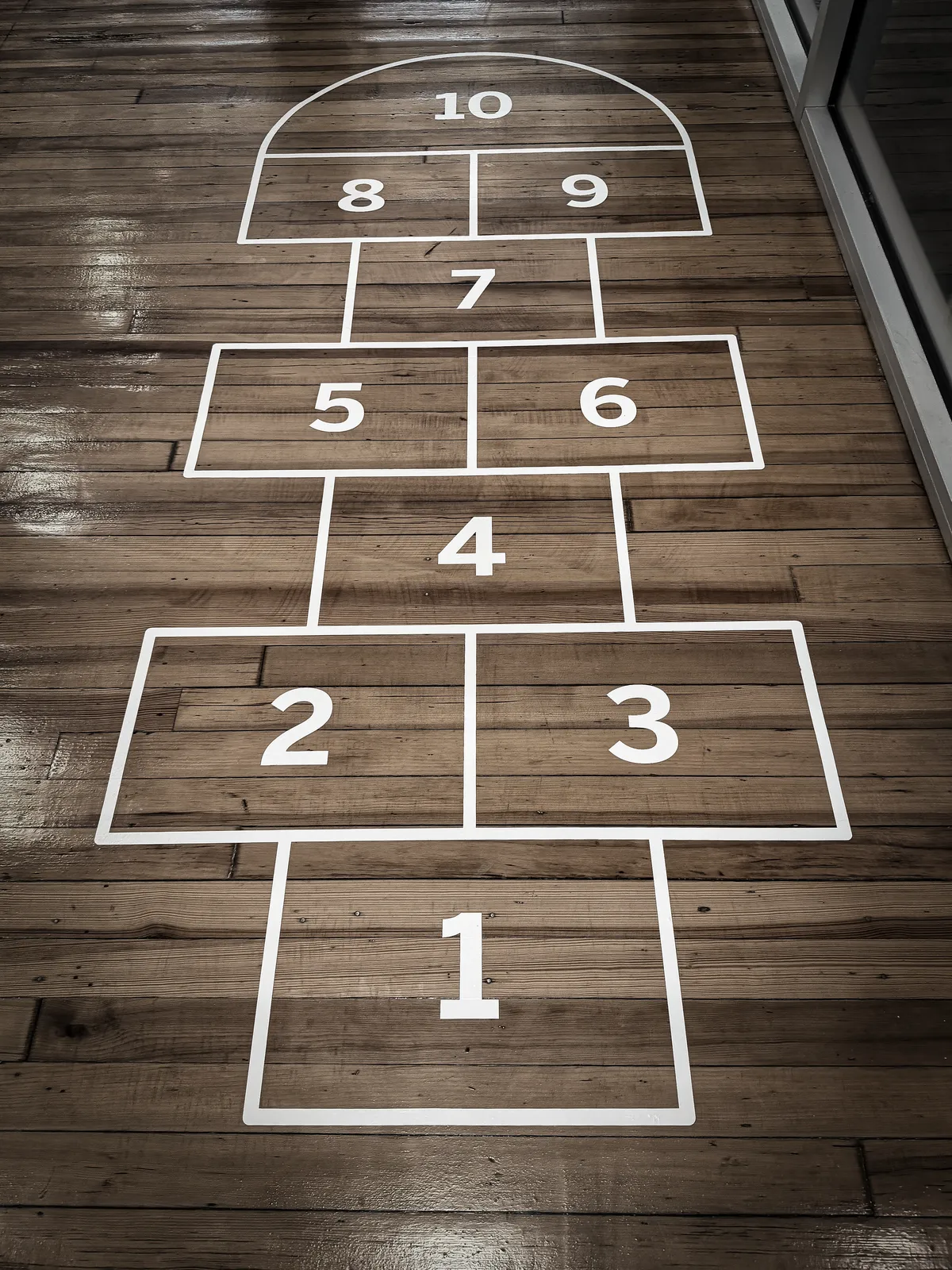
At the heart of the exhibit, right outside where the principal’s office once stood, Gallagher & Associates designed a tactile hopscotch pattern, an unexpected but poignant detail that illustrates the innocence of the moment; these girls played together at hopscotch and other games while they waited, sequestered, for four hours to be registered and start class that day. Now the simple game’s outline on the floor is a small invitation to pause and reflect that these were small children walking into history, carrying the weight of change on their shoulders before they were old enough to understand the gravity of it all. A permanent wall installation nearby introduces visitors to the girls themselves, giving faces to bravery and lived legacy.
The Legacy and Purpose Behind the Build
Part of our ethos at Downtown FabWorks is that good museum fabrication does more than look nice. It illuminates truths and invites participation. In a city as rich with cultural memory as New Orleans, that means honoring lineage and struggle while connecting these things to the present and future. The TEP Center itself embodies that mission. Under the leadership of a civil rights pioneer like Dr. Tate, the long-vacant McDonogh 19 building has been revitalized not just as a museum, but as a hub for educational programming, dialogue on racial equity, creation of community, and even affordable senior housing.
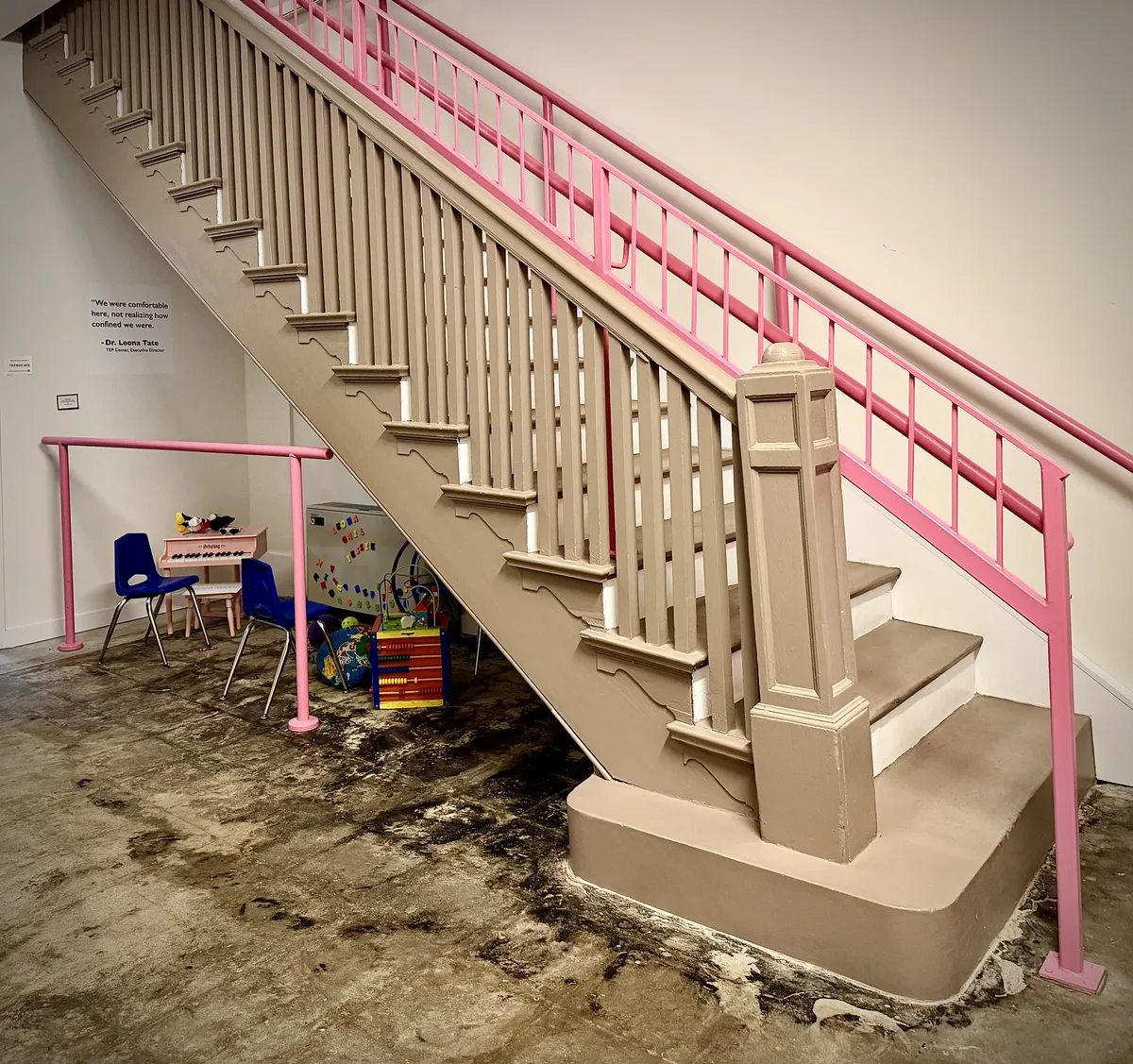
The truth is, experiences like those of the New Orleans Four are essential American civil rights storylines that too often get overlooked in the broader narrative. While Ruby Bridges’ walk at William Frantz Elementary has become a national touchstone, the story of the three children at McDonogh 19 is no less pivotal. At six years old, these girls walked through hostile crowds and into history, guided by courage and protected by law—and then spent months learning in empty classrooms and taking their lunch and recess breaks under the stairs, still functionally segregated. By 1962, McDonogh 19 had officially become an all-Black school because White parents had all withdrawn their children in protest.
By inviting visitors to retrace those same steps, “The Principal’s Office” helps morph abstract narratives from the past into immediate experience. It asks people to pivot from observation to empathy and consider: How did it feel to be in those little shoes? What thoughts would be going through your mind walking through that crowd? What impact would that one day have on the rest of your life?
The hope is that this museum experience creates a thread that connects the past to ongoing conversations about racial equity, educational justice, and community empowerment in our city and country. If we can feel even a little bit of what those children felt, what all Black Americans felt during that time, we can know that equality is something worth continuing to fight for, and that we should do everything we can to avoid repeating the ugly parts of our history as a country.
What’s Next—Building on Momentum
When the exhibit officially opened last month with a community ribbon-cutting ceremony, it was a joyous celebration and a moment of collective recognition. Educators, advocates, neighbors, and leaders gathered not just to mark a new museum installation, but to affirm what it represents: a reclaiming of history, a space for dialogue, and an invitation to future generations to imagine justice in action.
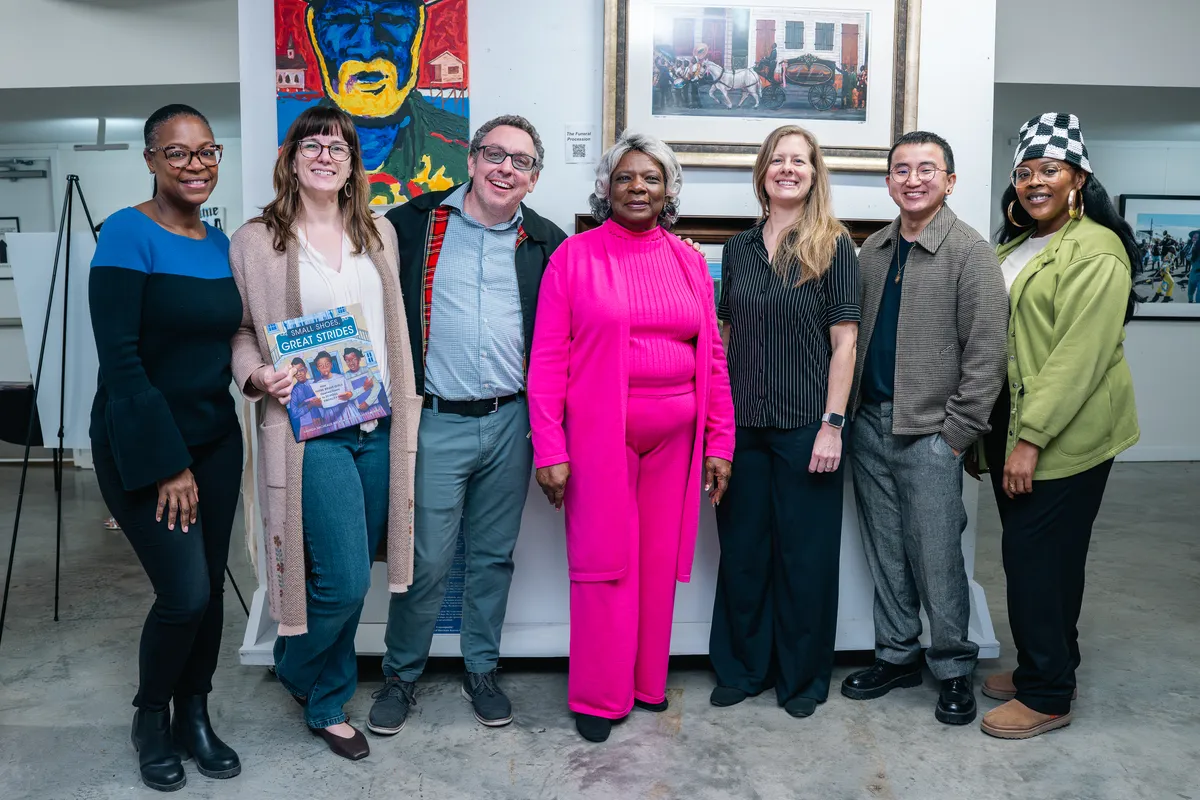
“The Principal’s Office” is now open to the public at the TEP Center, welcoming visitors of all ages to learn, reflect, and connect with a chapter of civil rights history that’s as relevant today as ever.
And the work isn’t done. Future plans include multimedia enhancements within the exhibit, a new first grade classroom display, and an expanded civil rights timeline that deepens the historical context for visitors. Each of these will build on the foundation laid by the physical walk through history that we helped fabricate, reinforcing the idea that understanding the past is a living, breathing experience, not a static one.
This permanent museum installation and future additions serve as a reminder that every forward step we take must honor the footsteps that came before.
____________________________
Spaces like the Tate, Etienne & Prevost Interpretive Center exist because a community believes its stories matter—and chooses to protect them. The TEP Center relies on the support of donors and benefactors to continue preserving history, expanding educational programming, and creating experiences that ensure these legacies aren’t forgotten. Every contribution helps keep this history accessible, tangible, and alive for the next generation. To be part of this important work, consider becoming a TEP Center benefactor and help carry this history forward. You can donate here.



Ryan McDonald

Jordan Schwartz

Paul Utterback

Mike Cassesi

Scott Beelman

Irina Gusin

Kristen Kain
who we
Work with