

Two weeks ago, I went to a conference in Chicago, then finished out the week with some PTO days to explore museums and visit with friends. The Windy City has felt like a second home to me ever since I evacuated there for six months after Hurricane Katrina. Even though I eventually moved back to New Orleans for a bit, I ended up living in Chicago again from 2007 to 2011, and I’ve visited regularly ever since. Despite that, it was my first time staying downtown, and I was excited to get to be more of a tourist than I usually would. After checking into my hotel, I took a walk around and quickly realized that my immediate neighborhood was packed with various themed and immersive environments.
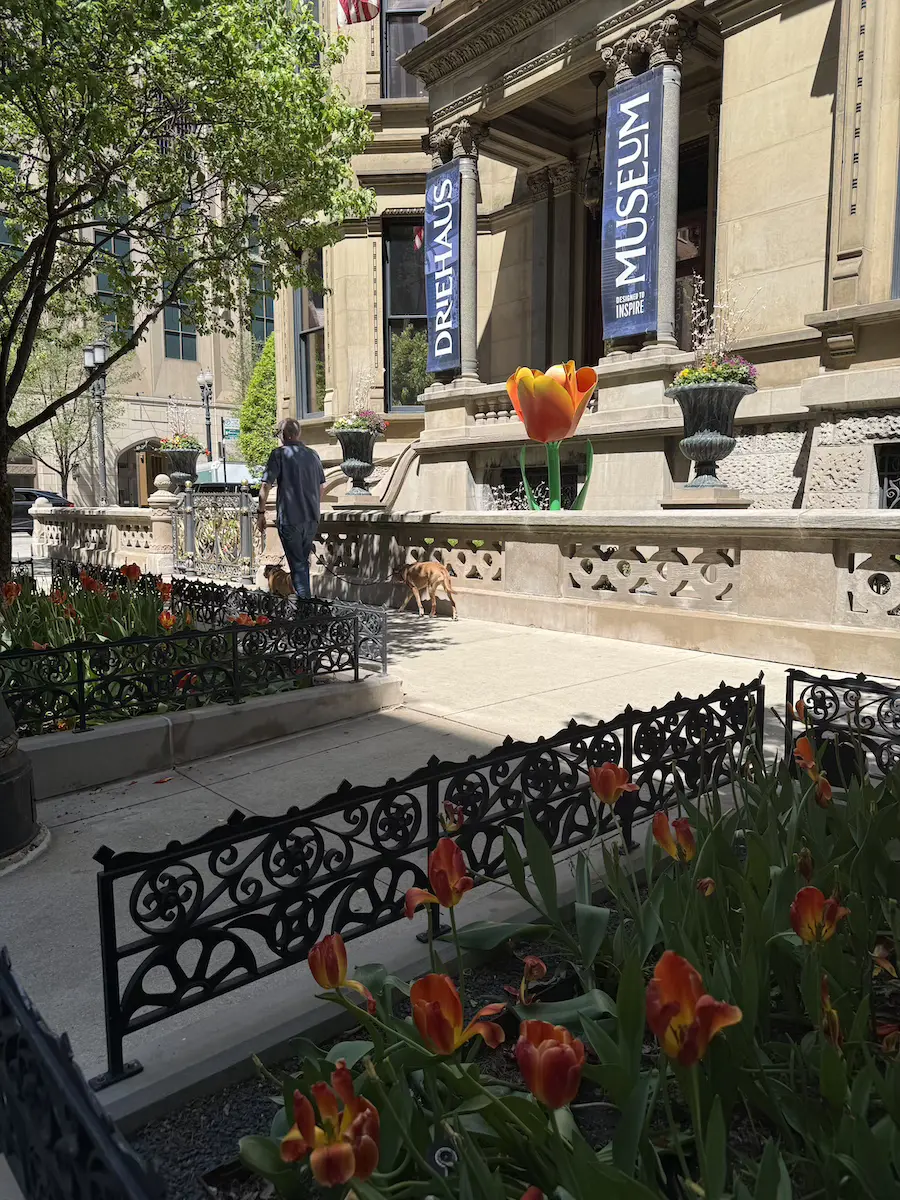
A few blocks away were the sleek facade and sensual interiors of Crying Tiger restaurant. Directly across from my hotel’s entrance was an escape room. Down one block was the The Hand and the Eye, Chicago’s newest immersive magic and dining experience. One block behind my hotel sat an immersive game venue. Two blocks away was the famous Driehaus Museum. I could go on, but you get the point.
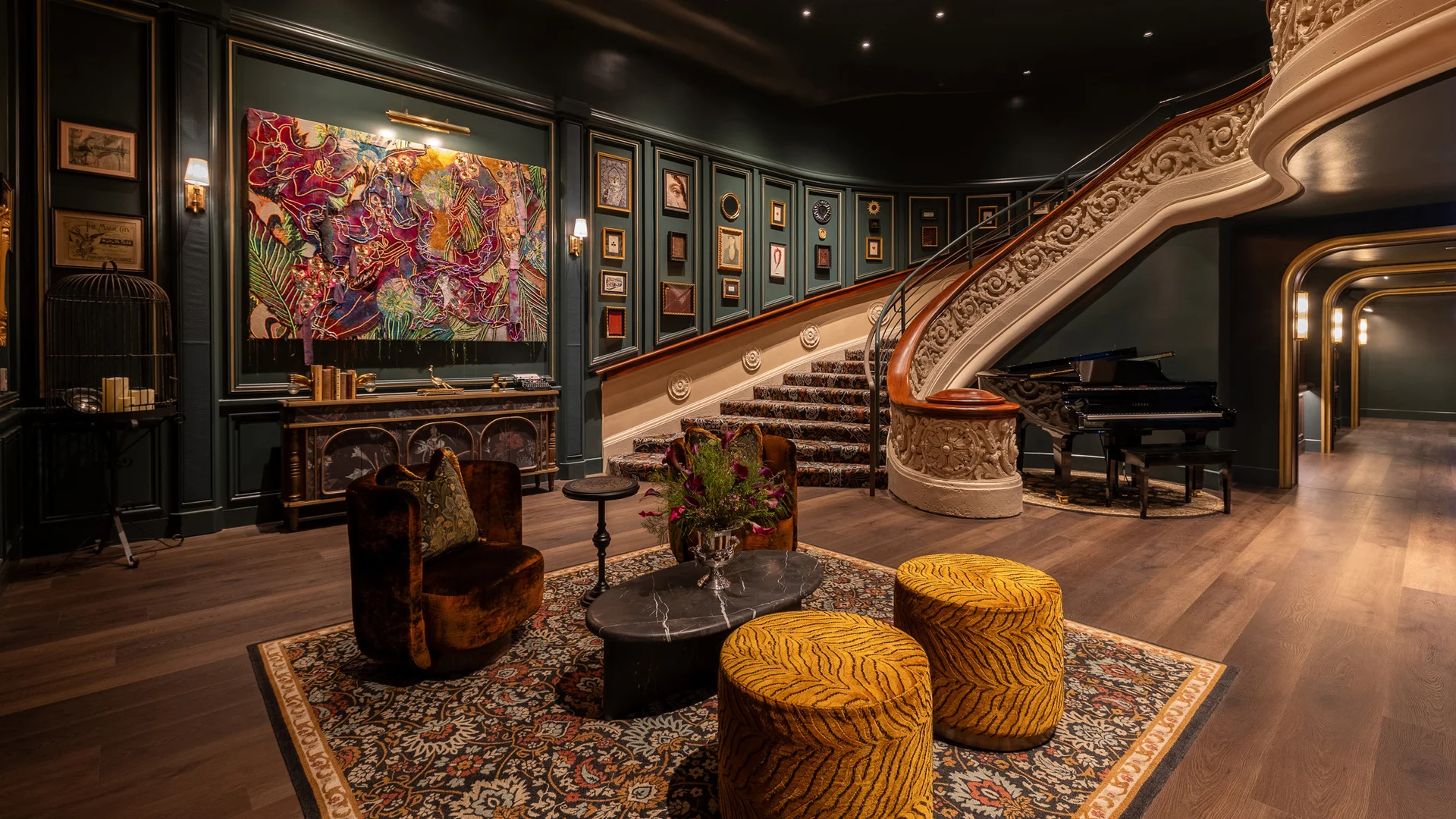
I was very disappointed to not get to visit The Hand and the Eye this time around! The mere sight of this place filled me with a burning custom-fabrication envy. A historic mansion returned to its former grandeur and retrofitted with multiple unique performance spaces, secret passages, customized journeys, and hidden artistic touches to amaze and delight even the most discerning visitor…who doesn’t want to be a part of that kind of story?!? Click through to read more about the build on Fast Company.
Even though all of these experiences were created separately, they formed a loose framework through which a visitor comes to understand a neighborhood and maybe even a city. As I walked, I realized that with a cooperative mindset, the way we tell the story of our city—and the story people take away with them—could be shifted substantially by proactively considering the experiences visitors have there. This isn't groundbreaking, of course, it's just the first time that I was able to see this up close in a place where it felt like a natural, organic progression.
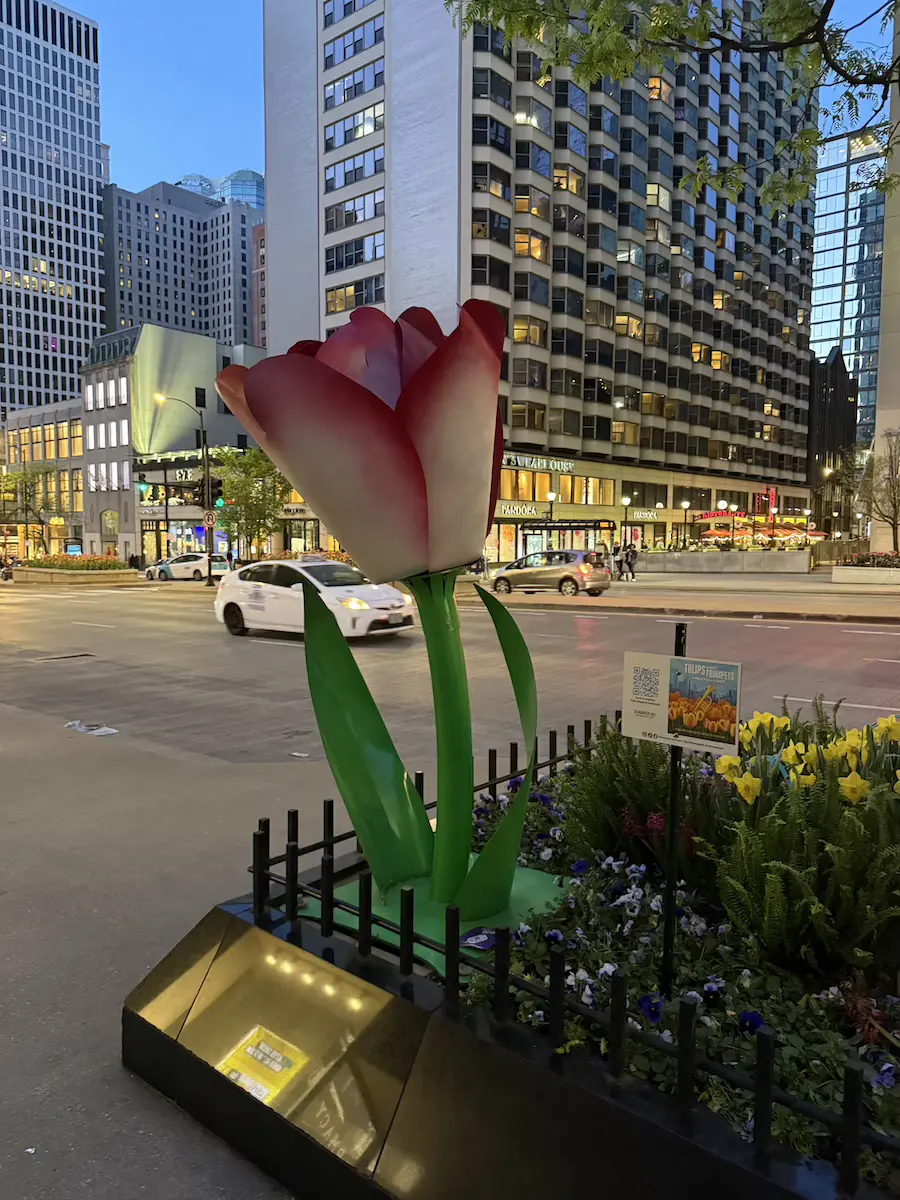
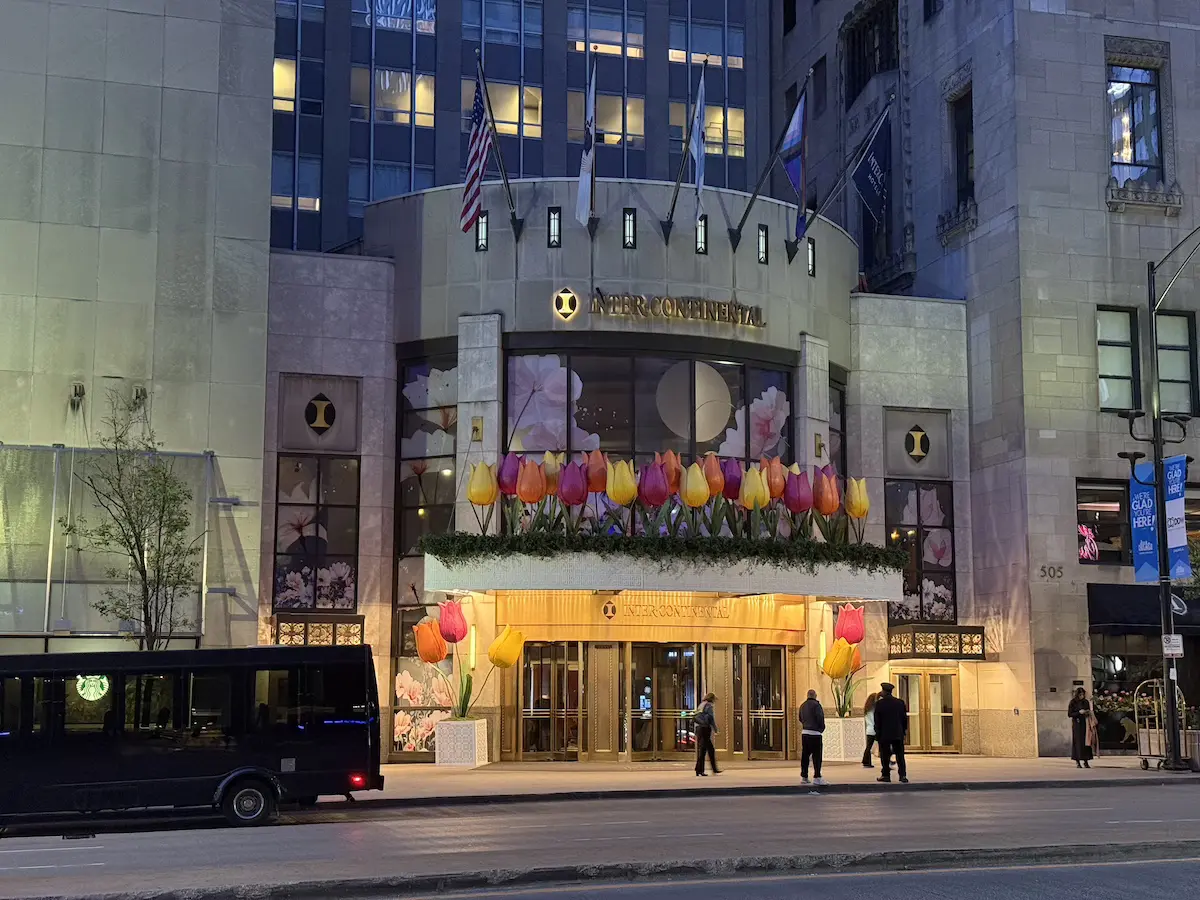
One of the most striking examples of the city treating experience as part of everyday life came during a walk along the Magnificent Mile and the surrounding neighborhood. Tulips and Trumpets: A Mile Full of Jazz is a beloved public art installation of expertly fabricated oversized tulips, interspersed with large plantings of real life tulips in every shape and size, that changed the tone of the street. It was high-quality work in a public setting, made to enhance rather than overpower. Produced by the Magnificent Mile Association, the installation feels like a touch of understated luxury, and by extension an investment in how people move through the city. It is accompanied by a series of live music and art events, and local businesses like the InterContinental (shown below) can choose to participate with their own installations.
Fabrication Field Study (Checking Out Immersive Work and Museums)
Once the conference ended, I made the most of my PTO. My first stop was David Byrne and Mala Gaonkar's Theater of the Mind at The Goodman Theatre, where I became a character in an immersive theatrical performance that encouraged visitors to understand how our minds work and how our perspectives can change—and be changed. There were many memorable aspects to the build, but I don’t want to ruin the surprise if you’re planning to go. Let’s just say that it was unexpectedly emotionally rich and the nostalgia hit hard, especially in the kitchen scene.
I also loved that participants were asked to lock up their phones before entering, which had as much to do with us being fully present as it did with not ruining some of the magic for ourselves or for future visitors. (This is something our VP of Ops, Kyle Salzman, also noticed during his trip to TEA INSPIRE and talked about at more length in last week’s blog post.)
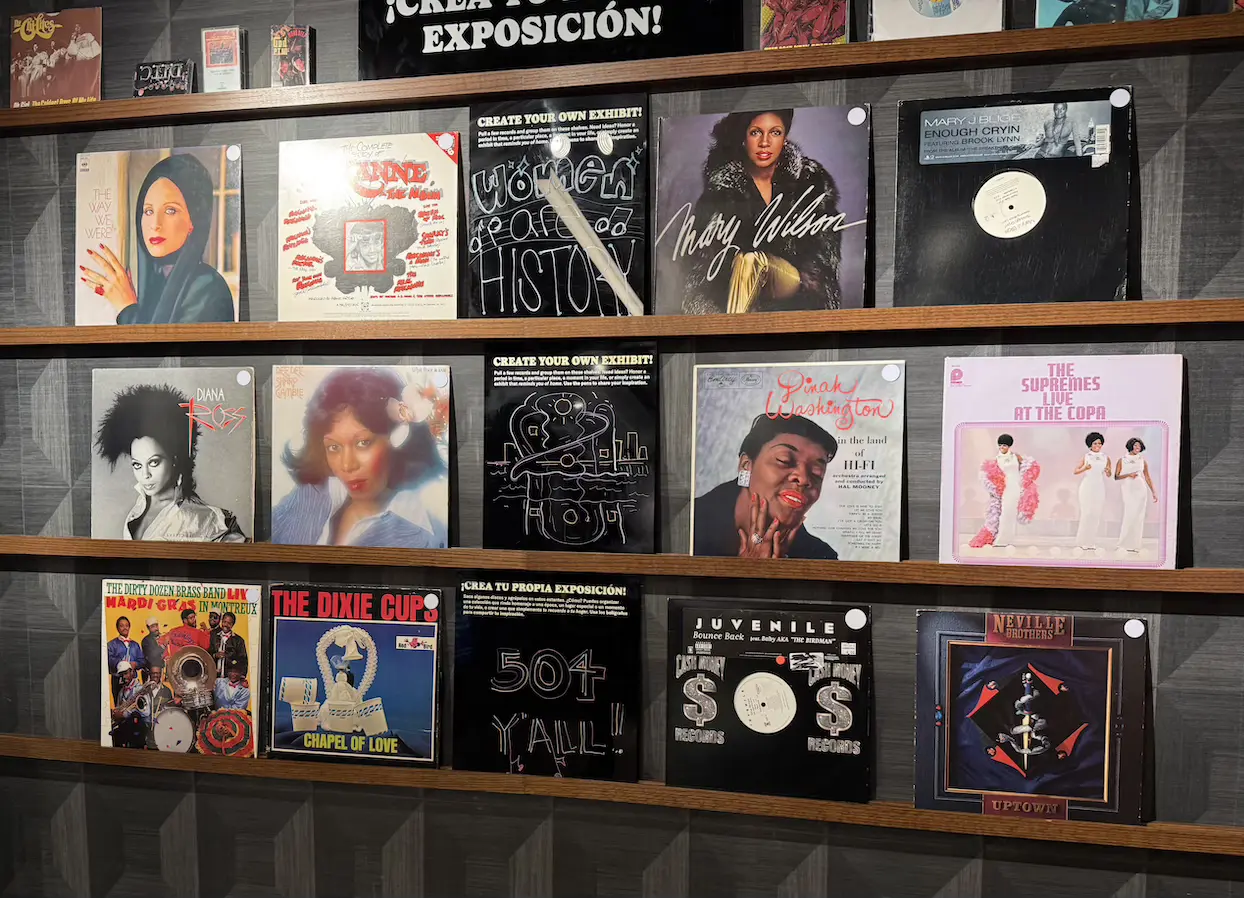
The rest of my trip was all about museums across the city. My friends and I visited the National Public Housing Museum, which got me thinking about how place-based storytelling can honor people without flattening them into a single narrative. Shoutout to Kira, our docent for the apartment tours, and to the amazing work of Manual Cinema, whose immersive seven-minute film uses shadow puppetry to beautifully and succinctly present an otherwise complicated and terrible story. I also loved the Rec Room exhibit, a listening room full of vinyl records by musicians who lived in public housing at some point in their lives, with the albums categorized by the cities each musician grew up in.
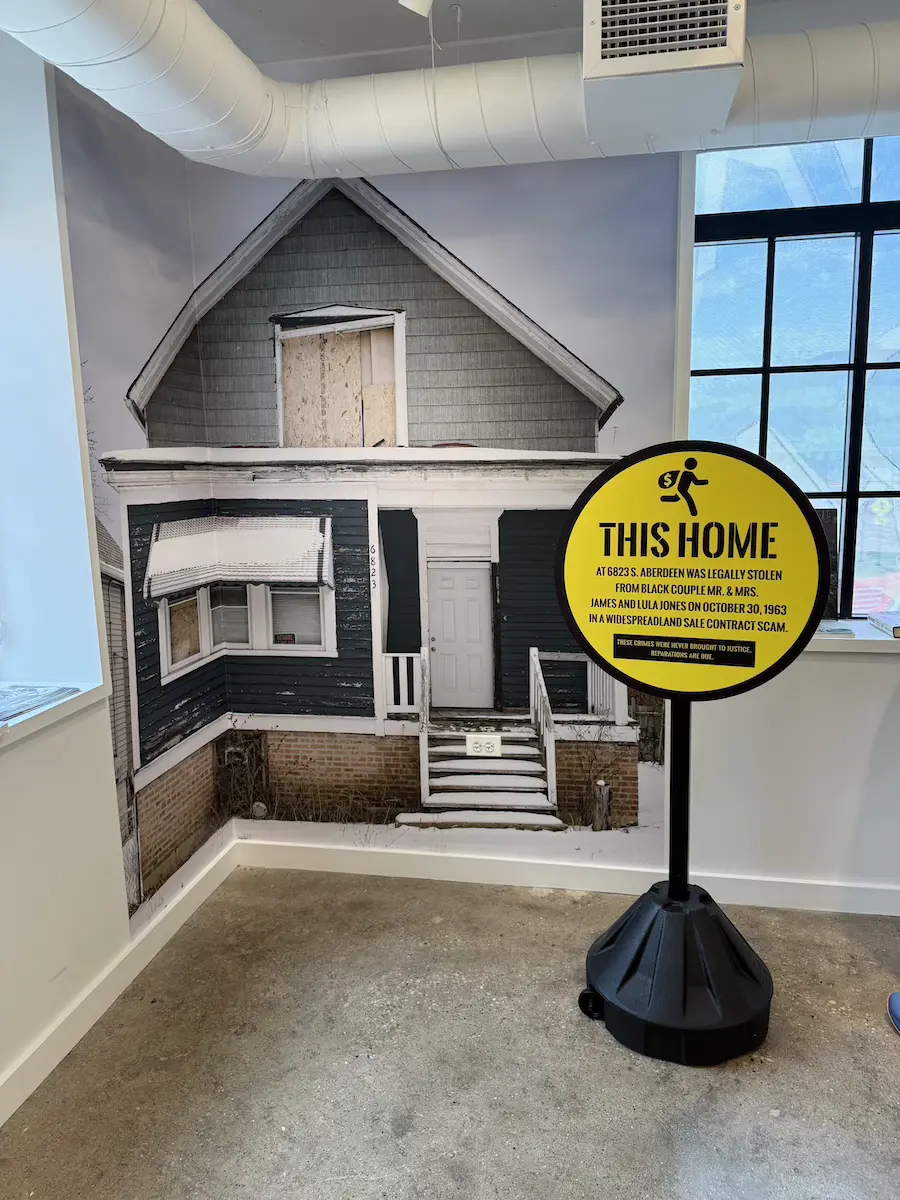
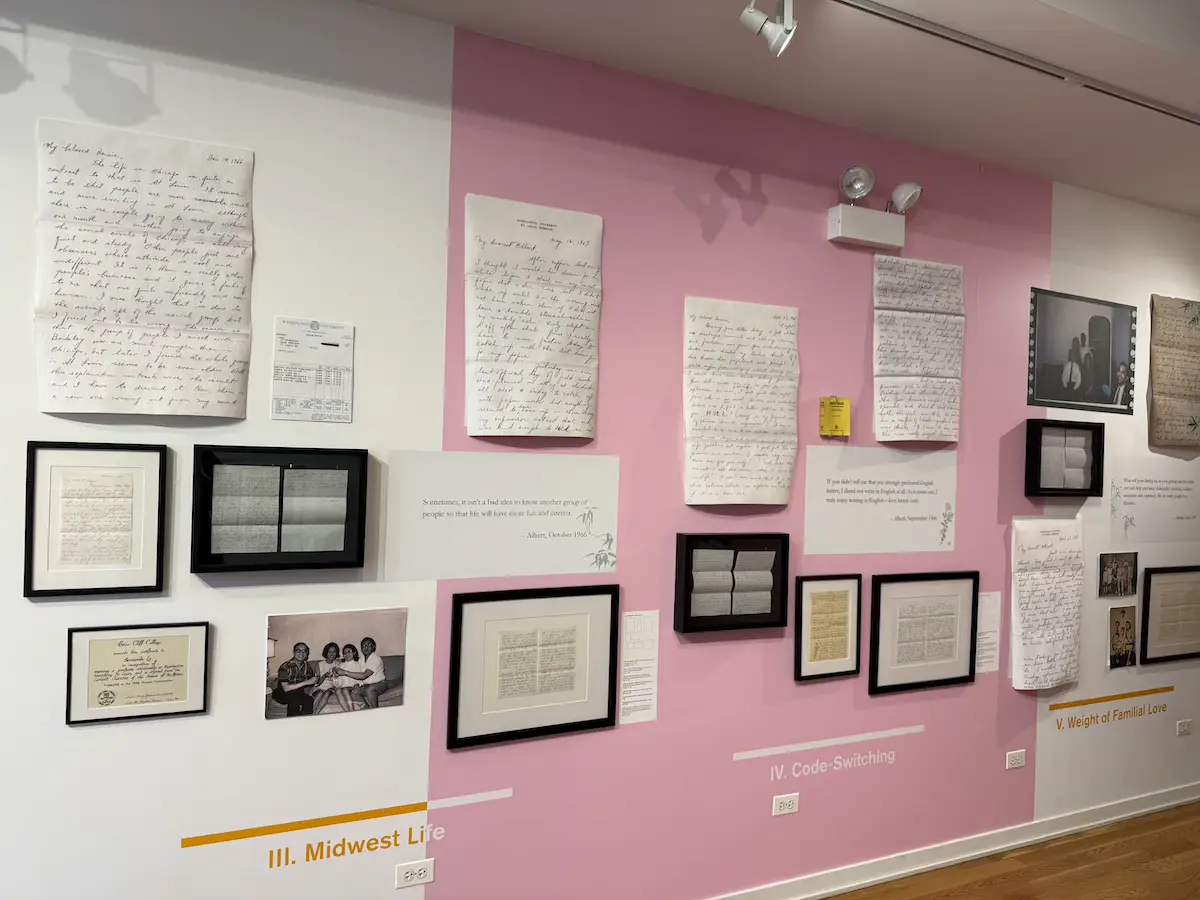
My visit wouldn't have been complete without trips to Jane Addam's Hull-House Museum (which is currently hosting a great exhibit on the history of urban gardening in Chicago) and the Chinese American Museum of Chicago. Both provided great reminders that civic identity is something that never stops growing and changing, and that a good museum’s approach to storytelling can be the kind of “care and feeding” that helps keep communities strong.
One of the fun, tactile elements that stood out to me at the latter was an exhibit of love letters sent in the 1960s between two first generation Chinese American college kids who eventually got married and became leaders in Chicago’s Chinese American community. The exhibit covers so much ground in just two walls of letters, examining code switching, meeting parental expectations, combatting traditional gender roles, all within a tale as old as time—young people in love. Some of the multi-page letters were reproduced in what appeared to be Tyvex, attached to the wall at the top, inviting visitors to touch, flip, and read.
The Great Chicago Fire and the Meaning of “We Will”
It’s funny—working in fabrication and spending all of my time reading about cool new themed environments, you’d think the newest, flashiest museum exhibits would be my favorites. However, the museum stop that stayed with me the most was probably the oldest fabrication work I saw: Chicago History Museum’s Diorama Hall.
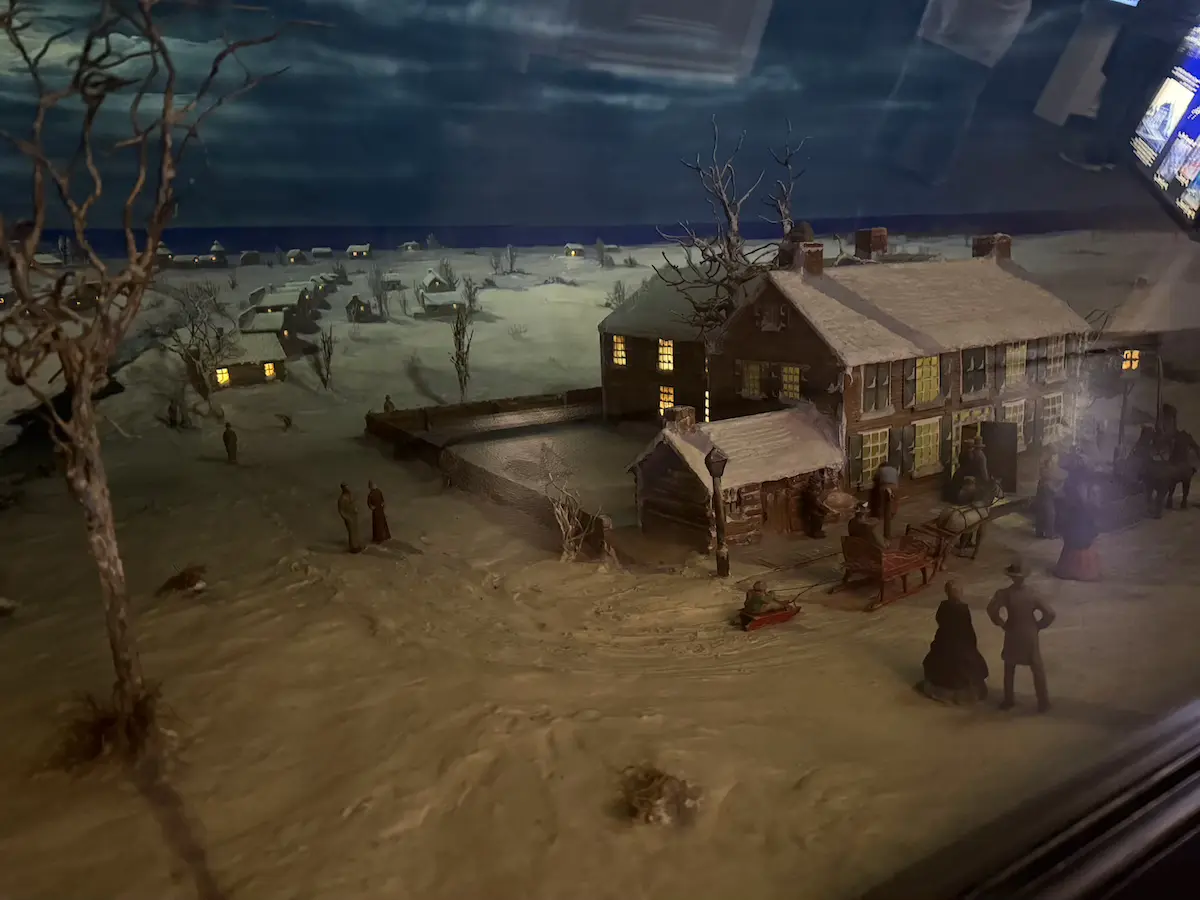
Built in the 1930s by German artisans in what was then a new technique, each of the museum’s seven dioramas measures roughly 4’ wide by 3’ deep and shares a scene from Chicago’s 19th century story, from its beginning as an outpost in 1804 through the 1893 World’s Fair. The dioramas were conserved in the early 2000s, and they’re in remarkably good shape. The original artisans captured perspective very well, and it’s easy to look into these relatively shallow boxes and imagine the scenes that stretch on in the distance.
They were all great, but the diorama that really caught my eye (and brought me to tears) depicted a tragedy that befell the city in 1871. In the nighttime scene, flames dance in the background, scorched buildings fill the city, and tiny people flee to the nearest water, carrying children and belongings. It was just a low-tech three-dimensional image, but it adequately conveyed the collective horror.
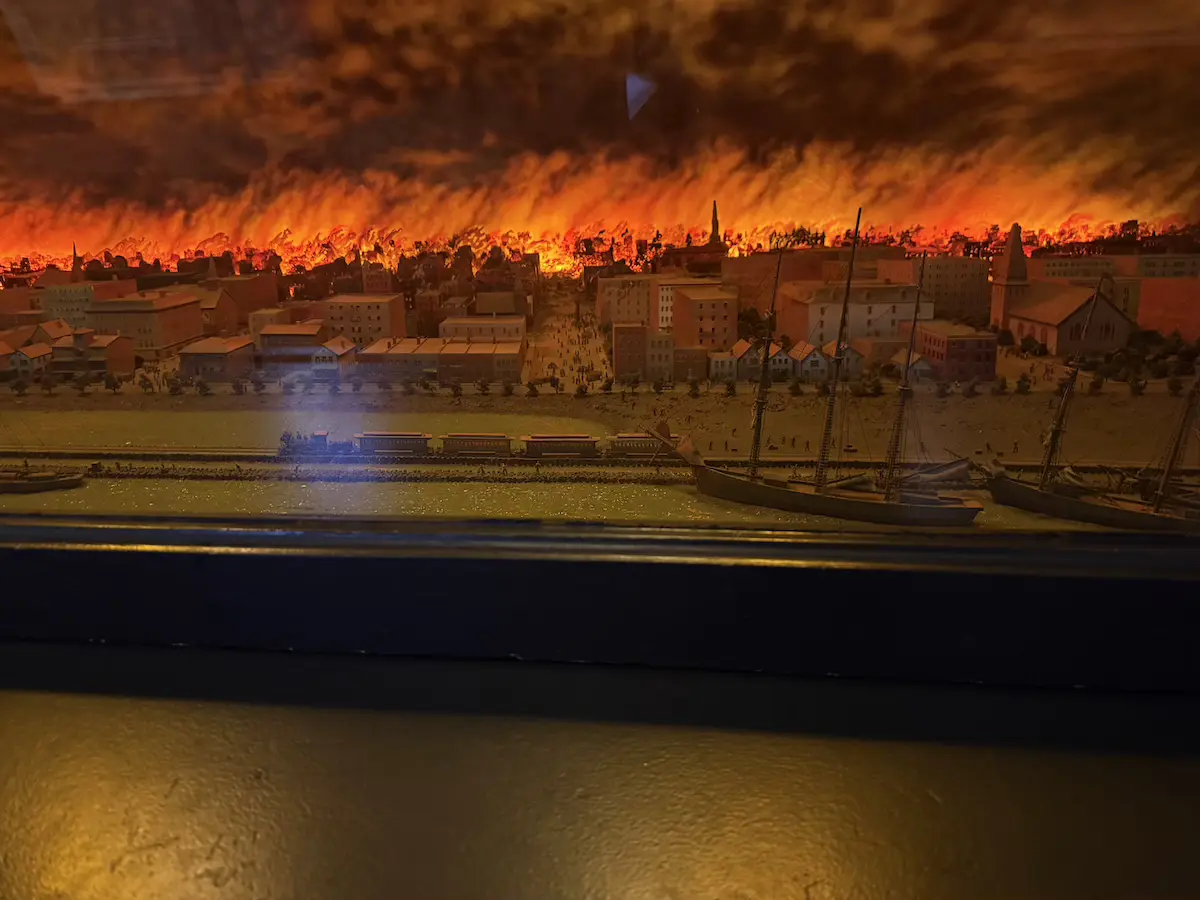
In the aftermath of the fire, the people of Chicago made a conscious decision to rebuild and make the city better while doing so. They took note of the conditions that spurred the fire to such destructive levels, and made changes to building standards and fire and emergency response. By the end of the decade, Chicago was known for having the most advanced fire-fighting standards in the country.
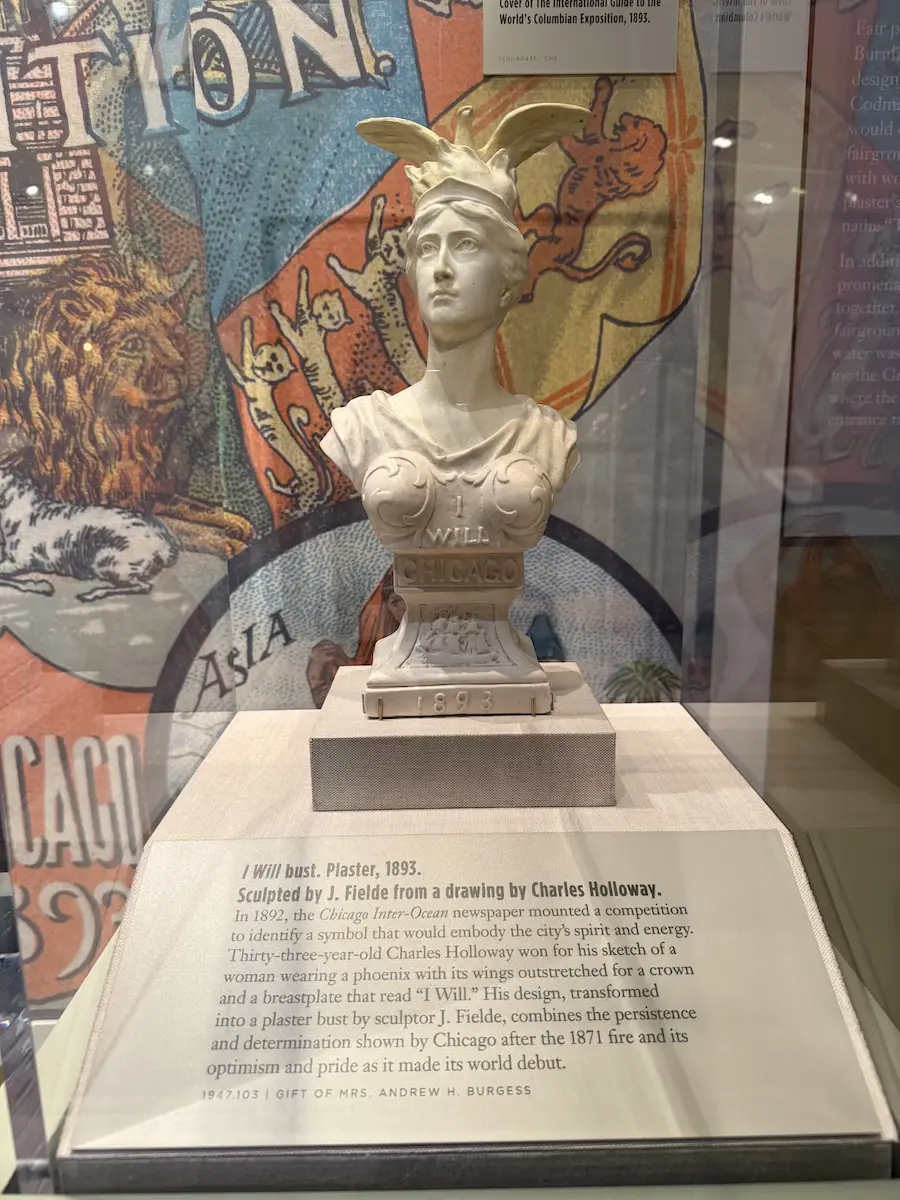
The city also chose a post-fire slogan, “I Will.” It’s direct. It’s less about vibes and more about commitment to action. It sounds like a city deciding that survival requires effort, then organizing itself around that belief. In short, it sounds like some folks who have resolved to get shit done.
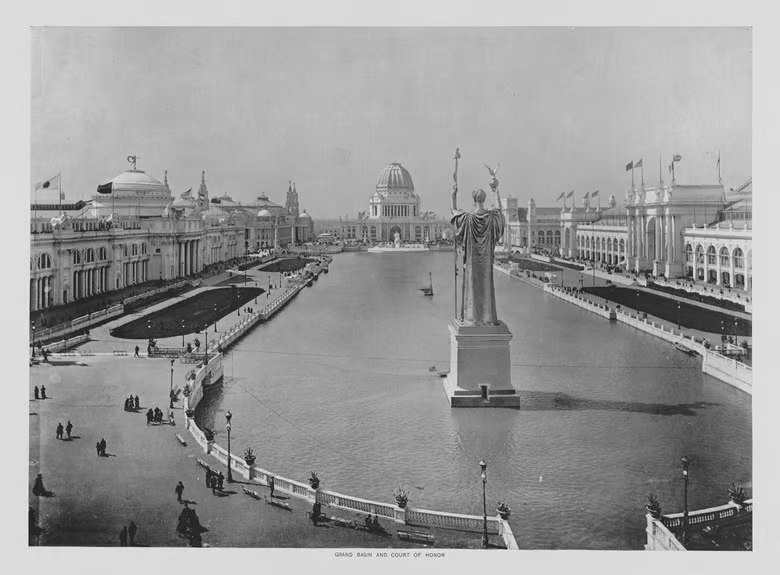
And they did. In 1882, the city bid on becoming the site of the 1893 World’s Columbian Exposition. They won it, and over the course of six months in 1893, more than 27 million visitors traveled to Chicago to see my personal favorite examples of scenic fabrication work, the neoclassical temporary pavilions known as The White City.
Back Home: Another Kind of Immersion
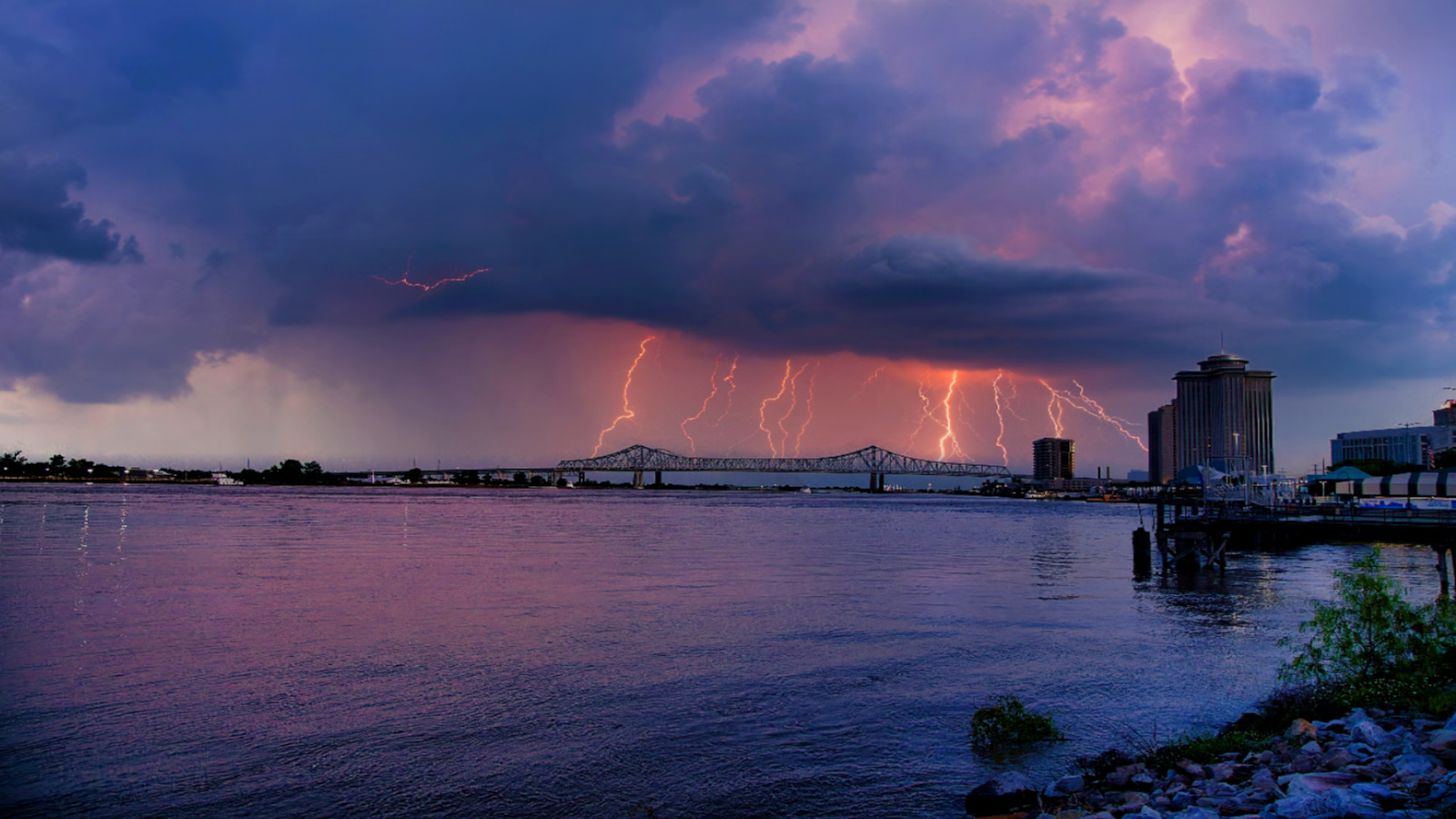
This stunning recovery was still at the top of my mind when I got home a few days later and heard that Tulane University researchers had released findings suggesting that New Orleans should start to relocate now in preparation for rising sea levels. The timing was hard to ignore. I had spent days thinking about one kind of immersion, the kind people choose because they want to step into a story. Then I came home to headlines about a different kind of immersion, the kind that makes people scared, angry, and exhausted.
I am not trying to turn this into a post about environmental policy, and I am not pretending that experiential work solves underwater streets. I’m also not praising Chicago for being a paragon; every city has its share of malfeasance, public policy failures, and disasters both natural and human-made.
What I am saying is the contrast sharpened something for me.
It got me thinking about what it’s going to take for us to stay here—or if you want to think about it from the other perspective, what it’s going to take to be able to create a city of people who can afford to move. It’s going to take hard work and higher standards. It’s going to take a shift from talking about how special New Orleans is to actually building infrastructure and employment opportunities that prove we are serious about our future as a people. We cannot keep operating as if time is unlimited, or as if the city’s cultural reputation will automatically translate into the kind of investment and commitment we need.
One of the keys to telling our story successfully is building experiences that help people understand and fall in love with this place, past, present, and future. We all know that New Orleans still gets reduced in the popular imagination to a narrow set of expectations. Too often, the shorthand is drinking culture, parades, and costumes, and the city’s complexity gets flattened into something disposable. That is not only insulting. It is strategically dangerous, because it trains visitors and decision-makers to see us as entertainment instead of a place worth fighting for. We have to tell our stories far more effectively if we’re going to get people invested enough to help us save this place.
Strength in Storytelling For Future Generations of New Orleanians
From a fabricator’s point of view, part of the answer is straightforward. Even in the worst-case scenario—complete relocation—a planned, sustainable move will take decades. That gives us 20+ years of need for stable employment and growth opportunities for present and future artists, artisans, and craftspeople. To do this, we need more serious experience-based projects that create stable, well-paid creative jobs for people who live here. We need projects that are executed with professional discipline, then maintained like we expect them to last. We also need experiences that give visitors a way to connect to the city beyond a party narrative, so they leave with a sense of investment and responsibility to protecting this jewel we call home.
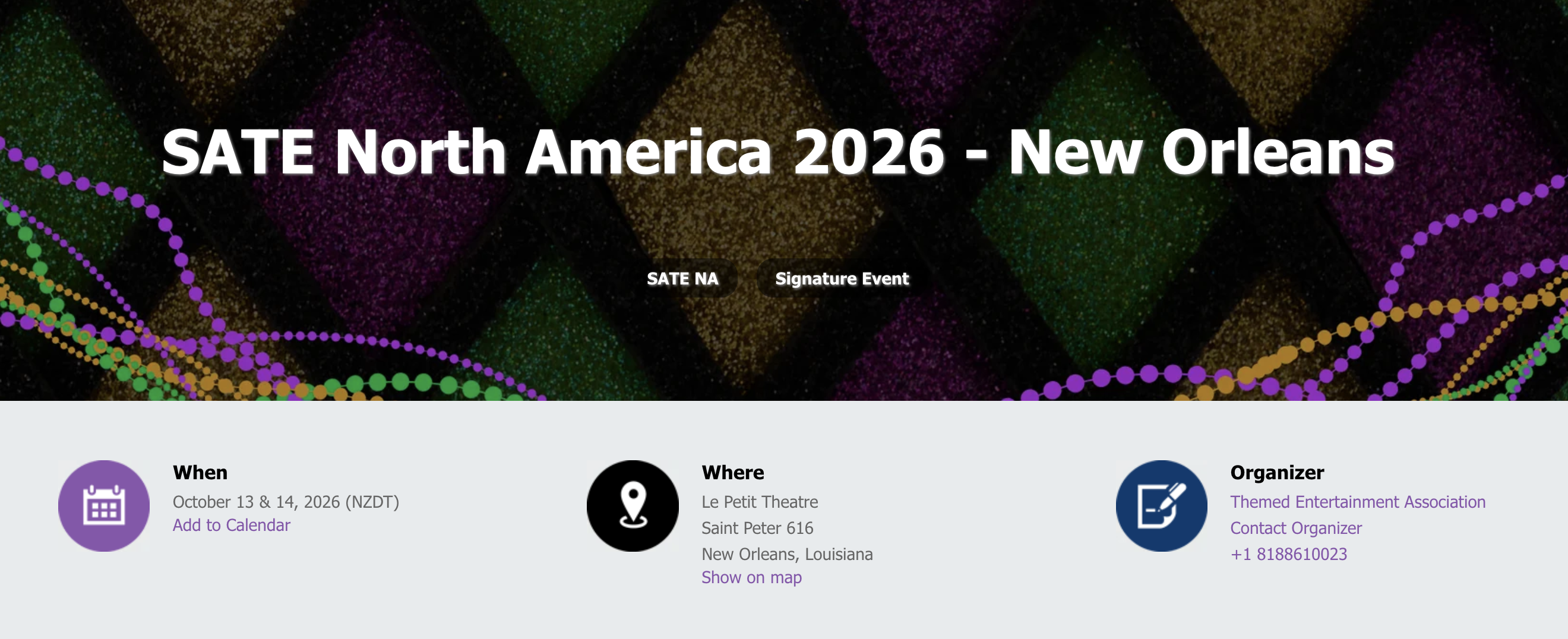
We’re also very lucky that the Themed Entertainment Association has chosen to hold this year's TEA SATE North America Conference in New Orleans. It gives us a rare chance to host a group of world-class themed entertainment professionals who understand how place, story, operations, and craft fit together. It is an opportunity to showcase what New Orleans can be when we build at a high standard and treat our own talent as worth investing in.
When I say “immersion in New Orleans,” I mean something specific. I mean experiences that help people understand where they are, who shaped this place, and what it costs to keep it alive. I mean work that respects residents as the primary audience, then welcomes visitors into the story. Most of all, I mean a city that stops treating craft as optional and starts building like our future depends on it, because it does.
Because even if we one day have to give up the buildings, the heart of this city is its people. We will take New Orleans with us wherever we go. But in the meantime, let’s get serious about building a framework that can take care of us here or anywhere else we might end up.




Ryan McDonald

Jordan Schwartz

Paul Utterback

Mike Cassesi

Scott Beelman

Irina Gusin

Kristen Kain
who we
Work with