



My husband works in production, which affords me frequent trips to fun destinations. Sometimes, it’s a swanky resort with pools and a spa. Others, it’s a place close to nature where I can go on hikes and get some fresh air. But I never skip a chance to tag along when he goes to New York City, so when he told me he was working Fanatics Fest again this year, I didn’t hesitate to snag a plane ticket.
As a newly minted Museum Nerd™️, my mission for this trip was to visit as many museums and experiential attractions as I possibly could. I definitely came home with a handful of your typical touristy photos, but mostly my camera roll revealed an unhinged amount of plinths, display cases, mounting hardware and exhibit walls–things most people would certainly not care about.

Apparently, this is what happens when you spend just a year working in experiential fabrication: your brain is forever warped (in a good way), and you become the kind of person who looks at an exhibit or built environment and asks: What is this made of? Why are there bubbles in these graphics already? How did they make this look like stone when I know it definitely isn’t? And, occasionally: why on earth did they build it that way?
After this trip, I am happy to report that once you know a little bit about how the magic gets made, it actually becomes even more magical.
Things Aren't Always What They Seem
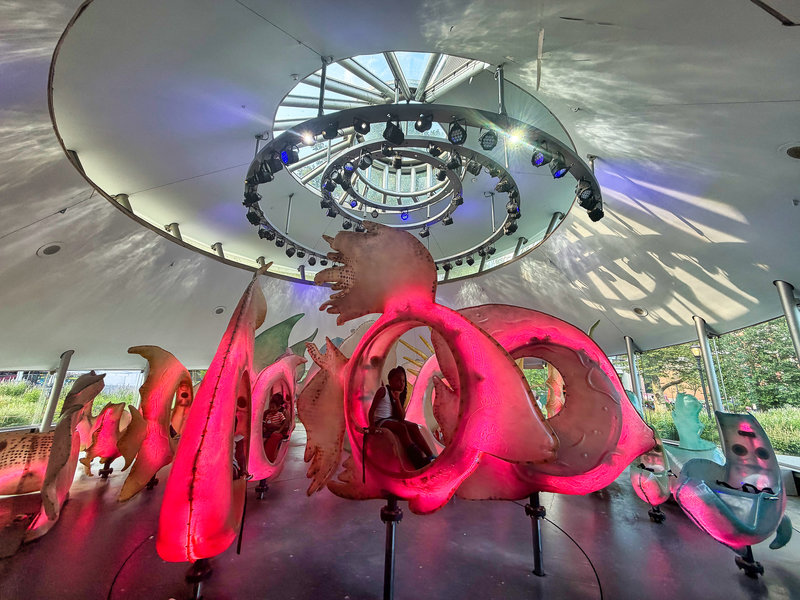
My first stop was the SeaGlass Carousel in Battery Park, an extremely strange attraction featuring enormous, brightly colored fish that glide around a carousel floor to bizzare music. Despite the name, and to my extreme disappointment, the fish are not made of sea glass. They're fiberglass. But after the chagrin wore off, I realized that this is exactly what experiential fabrication does: we start with ordinary materials and transform them into something playful, educational, and maybe even strange. But ultimately we hope what we’ve built is memorable, which this wonky collection of rideable art certainly is.
I Spy: NYC Edition
With the Spirit of Play Pretend by my side, I ventured into the Museum of the City of New York, where I encountered He Built This City, a monumentally detailed handmade model of all five of New York’s boroughs, created by Queens-born artist Joe Macken.

Macken spent 21 years building his version of The Big Apple by hand, using everyday materials like balsa wood, cardboard, Elmer’s Glue, and craft paint (ordinary supplies transformed into impactful storytelling...a theme is beginning to emerge). The finished model is roughly 50 by 27 feet and contains hundreds of sections. It was absolutely fascinating as a piece of craftsmanship, and the process of its creation is a big story in its own right. Equally striking to me was what happened around it.
The museum installed binoculars all around the little city, inviting us to look closer. With a model so large, it’s impossible for viewers to get physically close to most of the street-level detail Macken painstakingly crafted, so they were a clever addition–one that made me feel a little bit like an explorer, but even more so like a voyeur, which added some extra excitement to the experience. Peering through the binoculars, it honestly felt like at any moment, the streets would burst to life with tiny humans going about their busy little lives—a microcosm of the huge, bustling city outside.

All around the model, people pointed out their neighborhoods and familiar buildings and landmarks. I eventually started talking with a couple who were doing exactly what I was doing: trying to identify pieces of a place they thought they knew, but that was delivering them surprises they didn’t expect. I began to realize the model wasn't just showing people New York City, it was giving them a reason to talk about it and explore it from a new perspective.
This is something incredible that good museum exhibits can do–give people a fresh look at something they’ve maybe seen a hundred times and get them discussing it. I think humans learn best and engage more deeply when the subject matter is infused with novelty or excitement, and this exhibit is proof positive that’s true.

History in Layers
A floor below Macken’s New York, the short film Timescapes tells 400 years of New York City's history in 30 minutes through animated maps, archival photographs, prints, and paintings. Created by Jake Barton of Local Projects and architect and writer James Sanders, the film turns the physical growth of an enormous city into something you can actually understand.
On the top floor, The Occupied City examines New York during the Revolutionary War through artifacts, maps, videos, interactive elements, and environmental design. It wasn't necessarily the most groundbreaking immersive experience I've ever encountered, but that was part of what made the visit rewarding to me as someone who works in museum fabrication.
I found myself curious about the construction as much as the content, and was delighted to discover I had a few pretty cool ideas for how to make certain elements more engaging and exciting. The point is, I noticed I was looking at a museum exhibit and seeing the shop floor behind it, and that felt like knowing secrets most visitors don’t. Kinda (very) cool.

The Joys of Simplicity
While I did yearn for a bit more complexity at The Occupied City exhibit, I reveled in the simplicity of my next stop. I finished my day down the street at the AKC Museum of the Dog, and while his one was more of a no-frills experience, it may have been the most purely joyful 2 hours of my trip.
This place was not exactly what I envisioned, but it had plenty to love: paintings, photographs, sculptures, and more bronze statues than I think I’ve ever seen in one place, all celebrating humanity's long and loving relationship with our favorite four-legged companions. And apparently, people have been memorializing and venerating their dogs for a very long time.

I was very relieved to learn that this obsession did not start with me. As someone whose favorite hobby (ahem, compulsion) is pointing out (literally all) dogs in public and declaring how darn cute they are, I was extremely susceptible to this museum's charms; never have I felt more like a target audience.
I arrived late in the day, which turned out to be a blessing. There were fewer witnesses to my behavior as I wandered around, taking close-up photos of plinths and artifact mounts one minute and smiling, laughing, and occasionally crying the next. A collection of community submissions featured drawings, sculptures, paintings, and photographs that visitors could vote on. Naturally, the piece that brought me to tears got my vote. And it won!

I say this museum was simple, but thinking about it now, it didn't need to be complicated. It knew its audience, gave them something to love, and sent them home happy. And isn't that also part of the point? Museums don't always need to wow us with technology. Sometimes they just need to give us a reason to care, or to experience a feeling that is universal and rewarding, like joy. Mission completely accomplished by the Museum of the Dog.
History is Never Finished
The next day was dedicated to the Cathedral of Saint John the Divine, where I was reminded again that storytelling doesn't require a screen, an interactive or even an exhibit label. Sometimes the building itself is the experience.
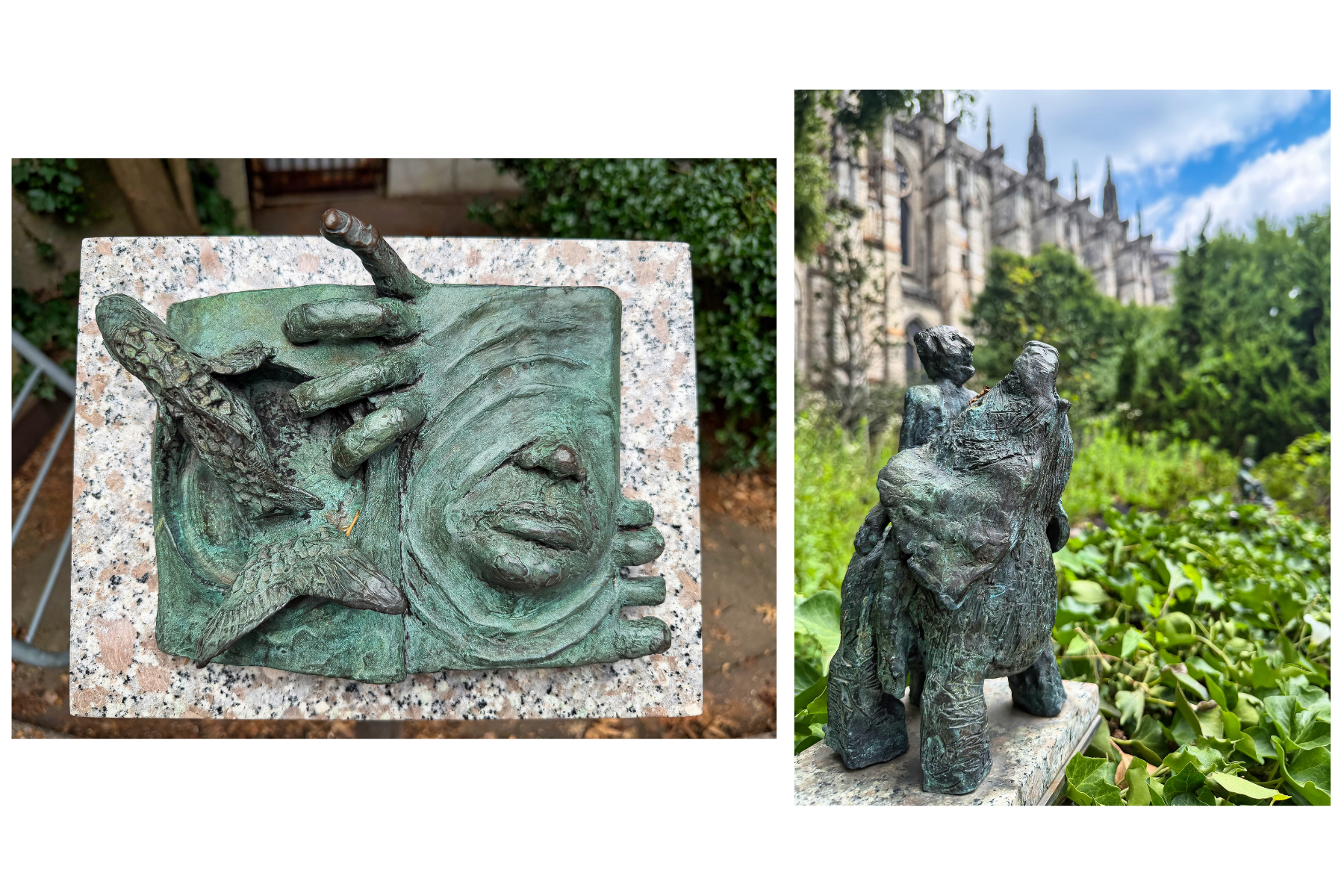
Unexpectedly, while looking for the cathedral's entrance, I stumbled upon a beautifully bizarre sculpture garden on the grounds. All the artworks in this garden were crafted by K-12 students in 1985, so given the ages of the artists and the decade, the strangeness made total sense, and was ultimately a delightful side quest.
Walking into the cathedral was an event all its own. Sensory changes were immediate and striking: the sound from the city outside melted away, it was cool and dim inside, and the physical enormity and beauty of my surroundings literally caused me to gasp. I know that sounds dramatic, but that’s because it was.
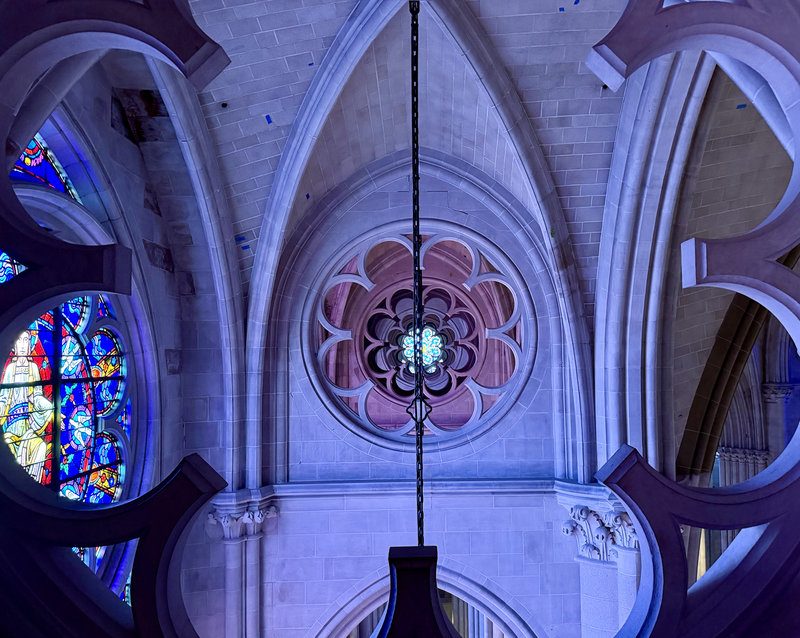
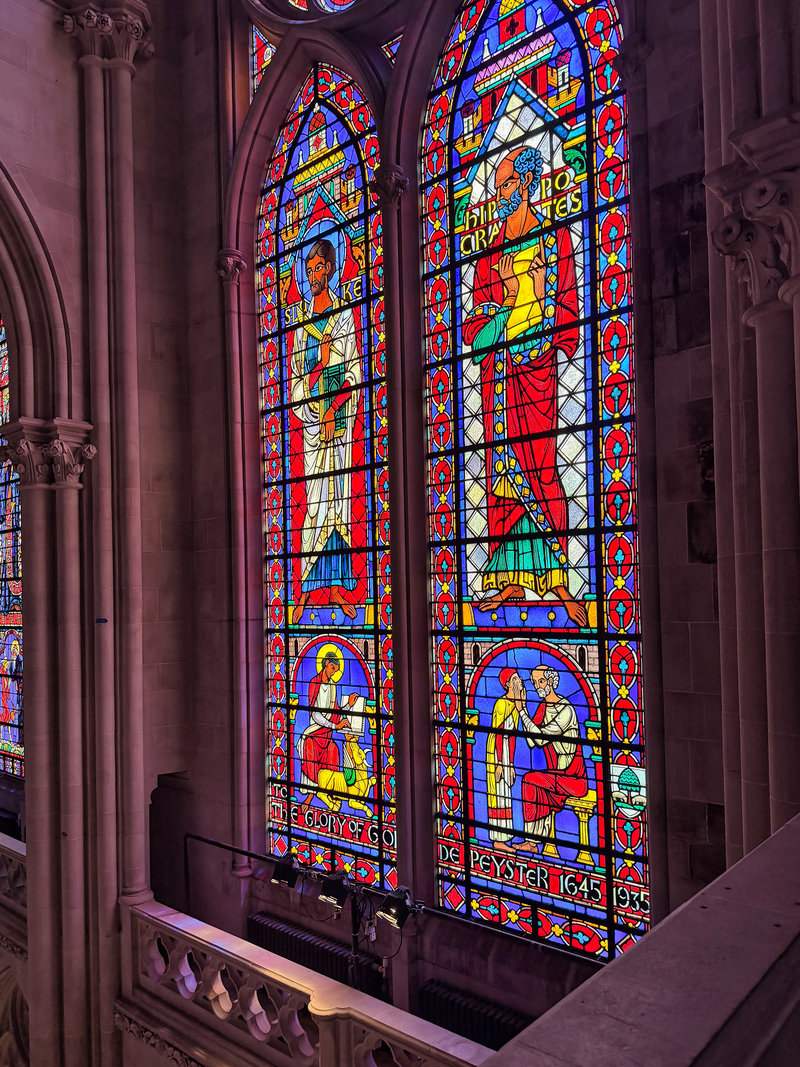
I took some time to wander before the guided tour, finding artwork and religious relics, craning my neck to take in all the architectural details, and peeking into small, tucked-away spaces. This place is full of discoveries both big and small, even if your tour is self-guided.
The Vertical Tour of the building is well worth it if you possess the necessary stamina and strong knees. We literally climbed into the walls and ascended flight after flight of winding, narrow staircases, stopping along the way to learn about everything from art and history to architecture and construction. Our guide, Bill, was a history professor retired from Columbia University, and he was a wellspring of both stories and patient, thorough answers to all my annoying questions. I warned him at the beginning of my Museum Nerd™️ status, and he was happy to indulge me.
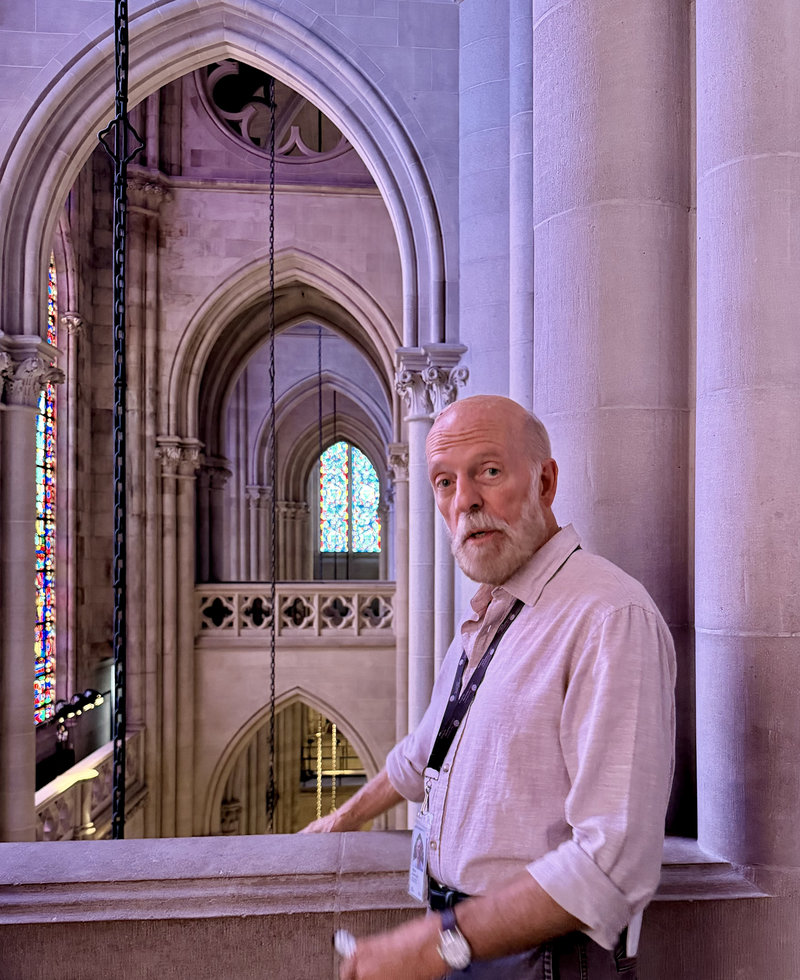
Interestingly, although to the untrained eye it appears to be a completed product, the cathedral has been under active construction since its first cornerstones were laid in 1892. As years have passed, it has continued to evolve, offering art exhibitions, performances and civic events alongside its religious functions. It is sometimes even affectionately called “St. John the Unfinished.”
This feels particularly adjacent to the way I think about museums and cultural spaces. A place doesn't have to be frozen in time to preserve history. It can continue changing while still carrying its history with it, and perhaps it must change in order to engage and impact the ever-evolving audiences that need to hear its stories.
This is also one of the reasons museums matter so much to cities.
Museums preserve stories, objects and experiences that might otherwise disappear over time. They give visitors a way to know a city and its history, but they also give residents new ways to understand and love where they live. They create reasons to travel from afar, reasons to linger, and reasons to come back. They add depth to a destination beyond restaurants, nightlife and the usual tourist checklist.
Most importantly, they give a city the chance to tell people what it values.
Our home city understands this particularly well–New Orleans has no shortage of stories worth passing along. Our museums and experiential spaces preserve the city's long and complicated history, celebrate its art and music, explore its neighborhoods and communities, and introduce visitors to things that might actually make an impact and give them something to take home with them besides a hangover. They are part of what makes The Crescent City more than a destination. They help make it a place.
That's the part of museum-going I hadn't fully appreciated before working in experiential fabrication.
The magic isn't necessarily in the flashiest technology or the fanciest interactive. Sometimes it's a tiny model, a carefully mounted artifact, an old building, a strange sculpture, a painting of a dog, or a quiet room where you suddenly find yourself fascinated by something you didn't expect to care about.
The best experiences make you curious. They make you look closer. They make you ask questions and turn to your neighbor so you can ponder it together. And that's where museums can become something bigger than a place to see old artifacts or beautiful art. They give us new ways to connect with a city, its stories, and each other.
And if you stop and look really closely, you might even start wondering how the heck somebody built the exhibit (or the city) in the first place.
__________________________________________________________________________________
If you work in museums or experiential, we want to work with you! Give our museum nerds a shout today to start planning your next exhibit.



Ryan McDonald

Jordan Schwartz

Paul Utterback

Mike Cassesi

Scott Beelman

Irina Gusin

Kristen Kain
who we
Work with