

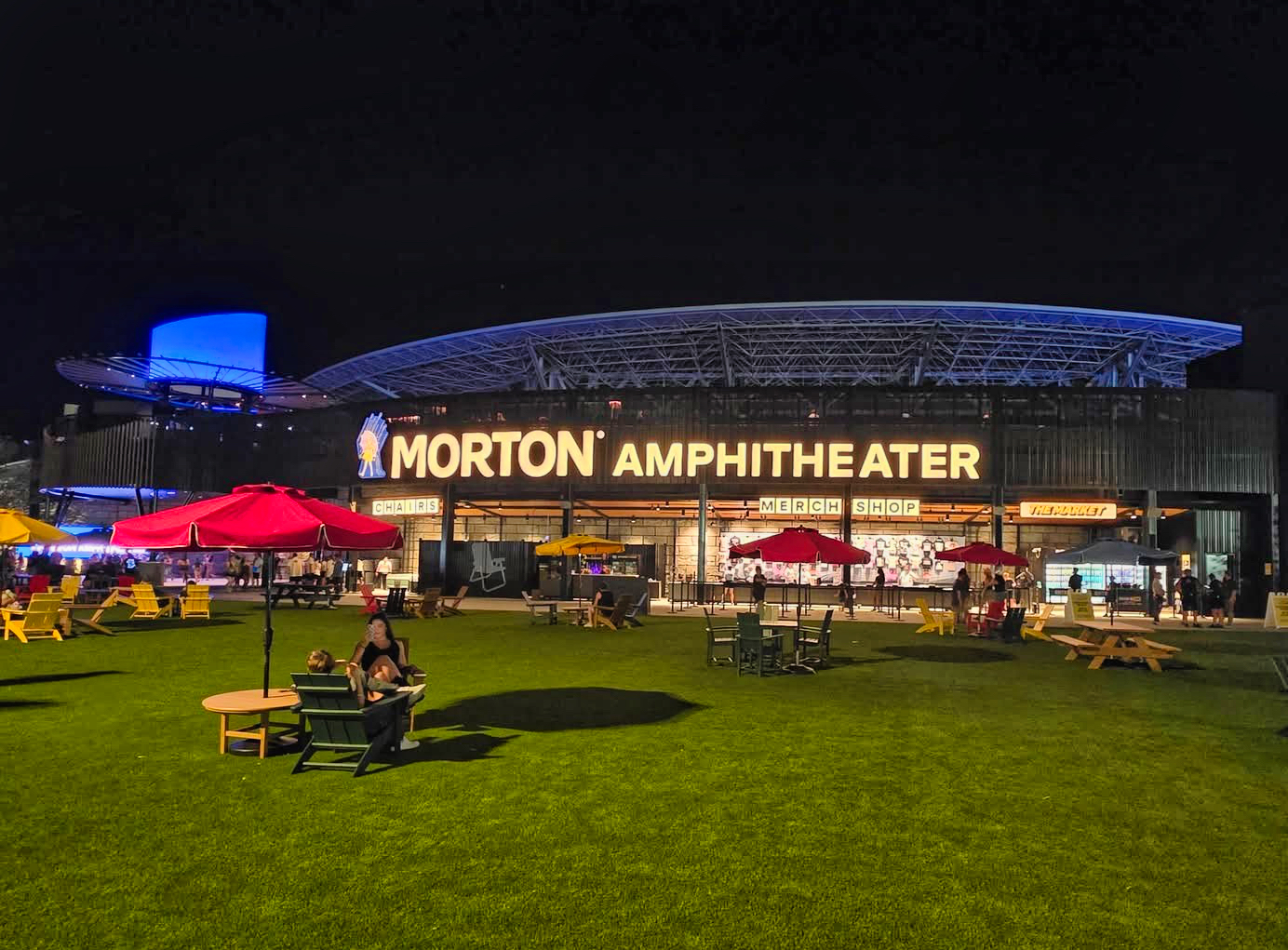
Last night, Morton Amphitheater officially opened in Riverside, Missouri, welcoming concertgoers to Live Nation's newest outdoor venue and adding another major destination to the Kansas City music scene. By now, most of the attention is understandably focused on the artists, the venue itself, and the excitement surrounding the upcoming season. That's how it should be.
Our connection to the project began much earlier, back when Morton Amphitheater was still a construction site and two of its most distinctive features existed only as a concept.
Live Nation approached us with an ambitious idea for a pair of monumental lanterns that would help define the arrival experience at the venue. The vision was compelling from the start. These wouldn't be decorative fixtures tucked into a landscape plan. They would be towering illuminated structures capable of creating a visual landmark for the amphitheater while contributing to the atmosphere that makes live entertainment feel special before a single note is played.

The challenge wasn't whether they could be built; the challenge was determining the best way to build them. This distinction is where custom fabricators like us start to shine.
Over the past couple of years, we've collaborated with Live Nation on a variety of projects and hit home runs with some other smaller, yet significant, exciting ideas like the Backyard Trucks and DJ Booths. Our friends there know that novel concepts like this tend to reach their glowing reality when we're brought into the conversation early. Sometimes the most valuable thing a fabricator can contribute isn't production capacity—it's helping a client navigate the unknowns that sit between an exciting idea and a successful finished product.
In this case, those unknowns included everything from structural approaches and attachment methods to material selection, lighting performance, durability, and maintenance. The lanterns needed to withstand the realities of permanent outdoor installation while delivering a very specific visual effect at night. Before anyone committed to a final direction, the entire team had to see what those ideas looked like in the real world.
Enter stage right: The Prototype.
Building the Test Before Building the Project
When clients imagine big, we like to imagine big with them. We love hefty visions, because figuring out how to bring wild ideas to life is our superpower. In this case, they came to us wanting to build two giant lanterns that would set this new amphitheater apart from anything else in the area, and we were so inspired by that.
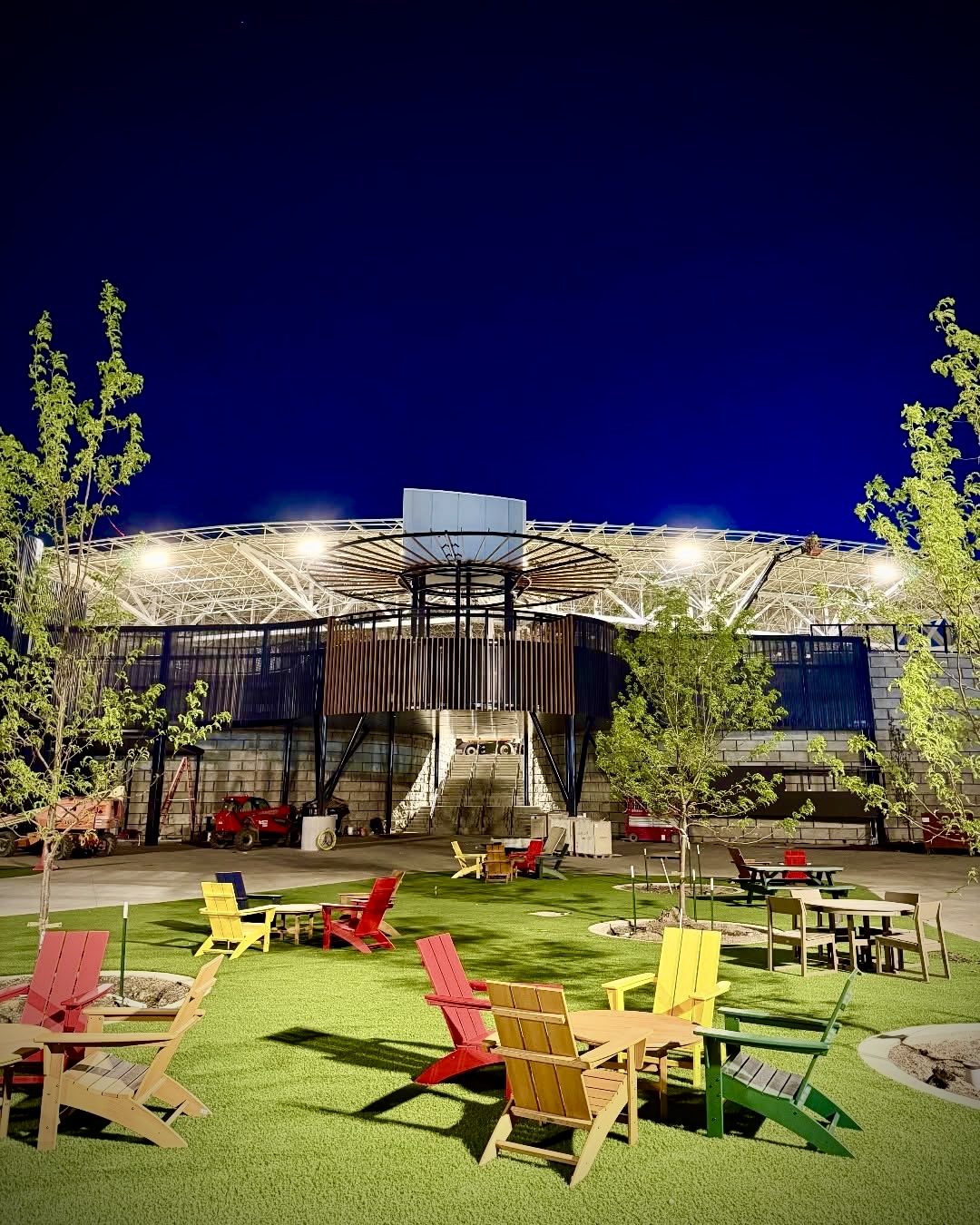
One key piece to solve for: what materials would help these venue monuments stand up to the elements and show off the lighting best?
Working alongside lighting specialists from Bandit Lites, our team began exploring multiple approaches for the lantern structure. Different materials, panel configurations, finishes, and attachment methods were evaluated to understand how each decision affected the quality of the light. Various framing concepts were tested, including systems that prioritized minimal shadowing while maintaining the structural integrity required for a permanent outdoor installation.
What sounds straightforward on paper quickly became a highly collaborative process involving every department in our shop.
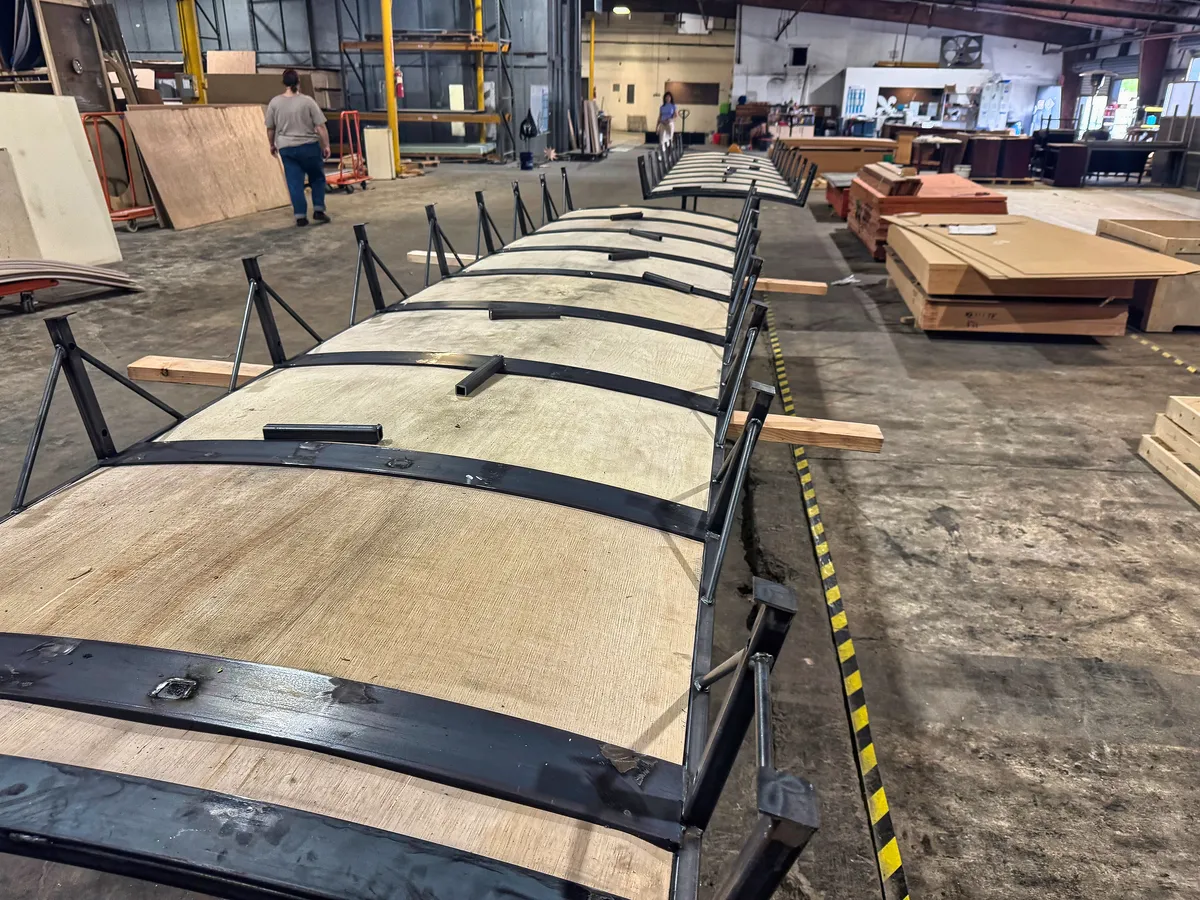
Technical Design worked through geometry, engineering requirements, and building methods. CNC operators produced precision-cut components used to verify fitment. Metalworks fabricated structural elements. Millwork created curved panel systems for testing. Finishing evaluated coatings and reflective surfaces. Even our Assembly Team (our Installation Team in disguise) became involved well before any on-site phases began because so much of the prove-it was happening in house.
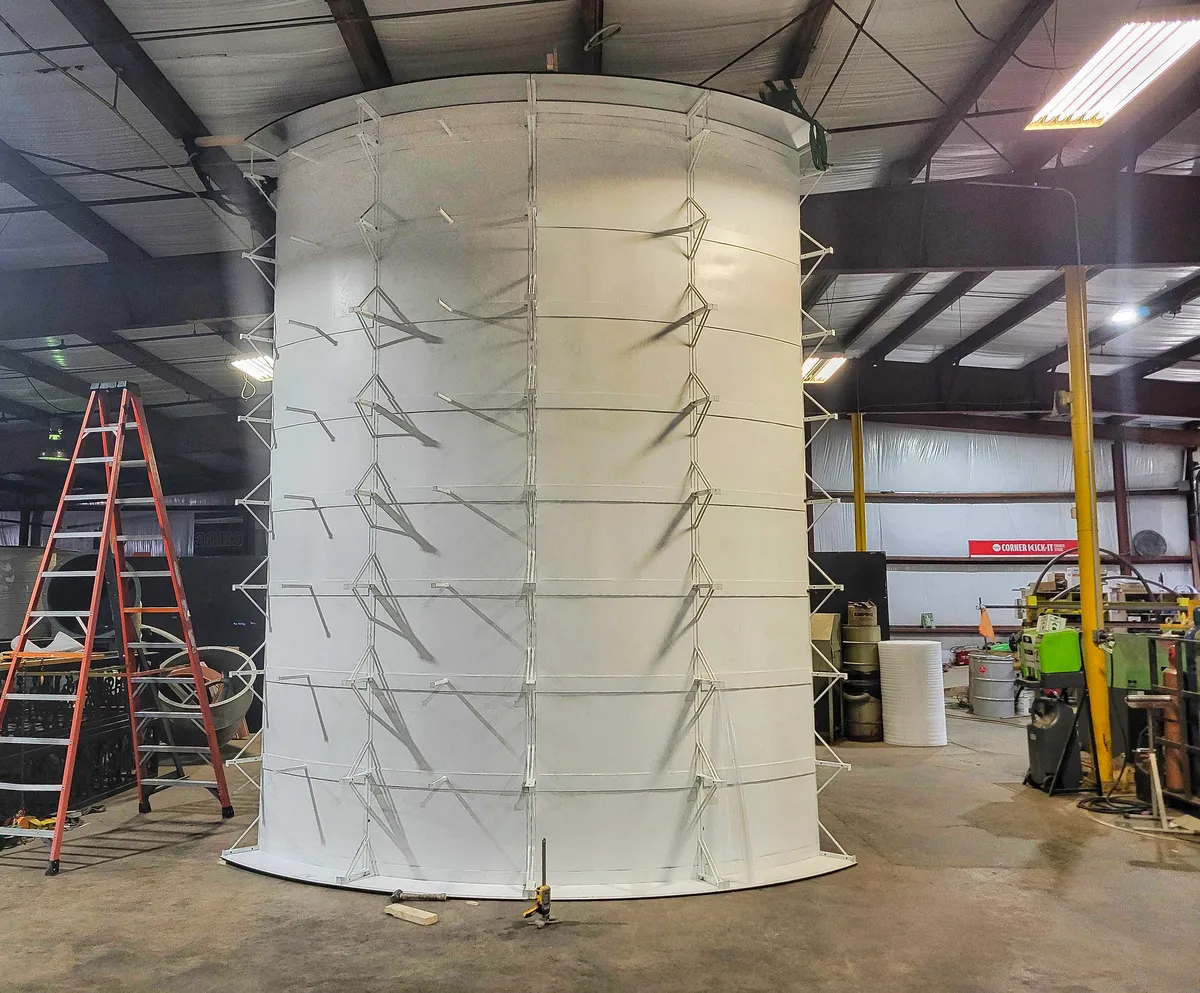
It turns out, a lantern is a surprisingly demanding object when you start examining it closely. Every internal component has the potential to create unwanted shadows. Every attachment method affects the appearance of the exterior surface. Every finish influences the way light moves through the structure. A choice that seems insignificant during fabrication can become highly visible once the lantern is illuminated after dark.
Those are the kinds of problems that real-world experiments solve better than drawings ever can.
A View From the Overpass
One of the realities of experiential fabrication is that sometimes a project needs to leave the shop before anyone can properly evaluate it. That was certainly true here, but we only had to take it as far as our parking lot.
The prototype had to be viewed upright and illuminated at something close to its intended scale, which required considerably more effort than simply rolling it outside and flipping the lights on. Temporary rigging structures were fabricated and attached specifically for the testing process, and we brought in additional rigging equipment we didn't already own. Finally, a telehandler was rented so the prototypes could be elevated high enough to create realistic viewing conditions.
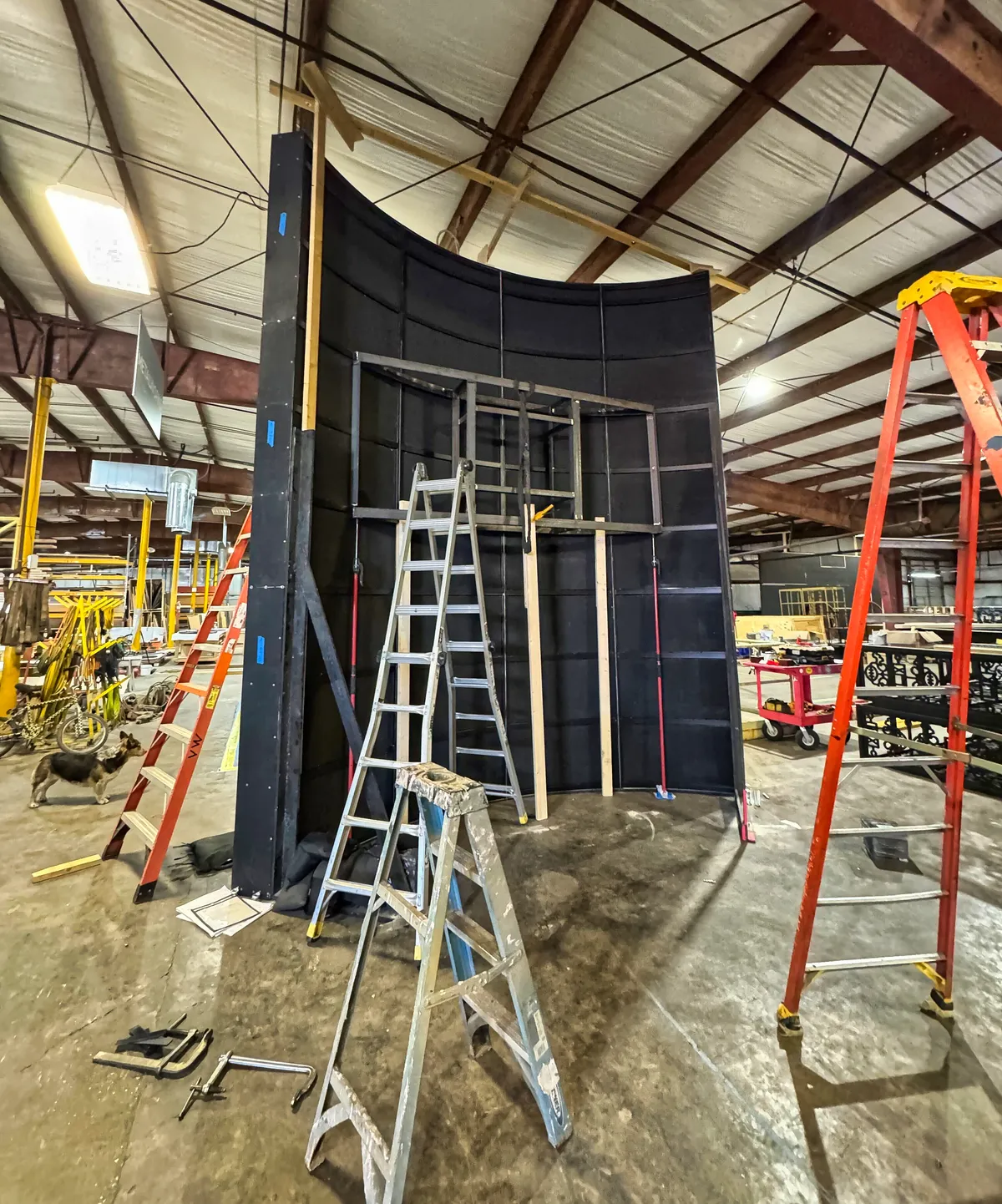
A significant amount of planning, labor, equipment, and expertise was dedicated to raising a giant glowing cylinder into the air so a group of designers, fabricators, and lighting specialists could stand around studying it. This, admittedly, is a sentence that captures custom fabrication and production remarkably well.
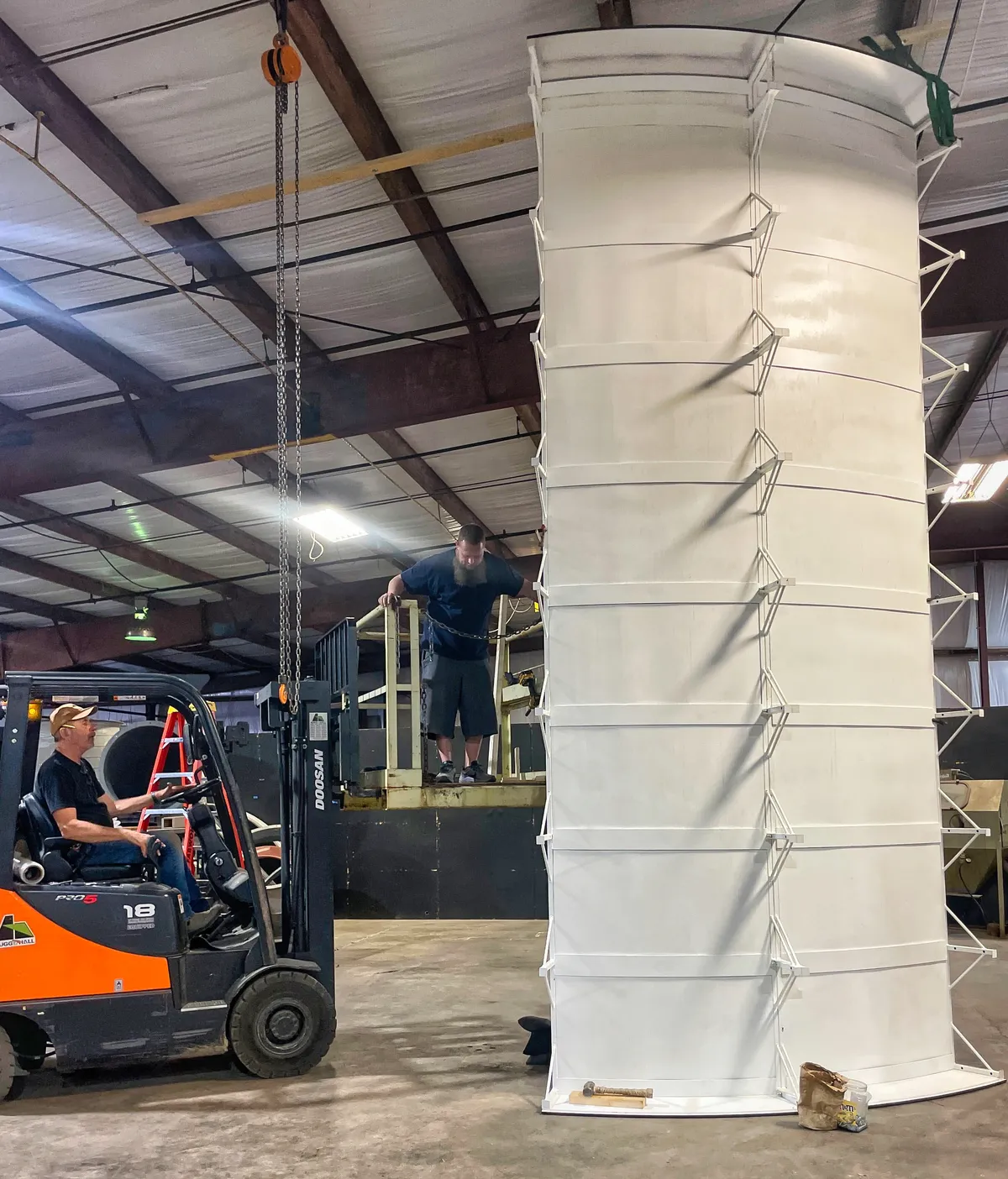
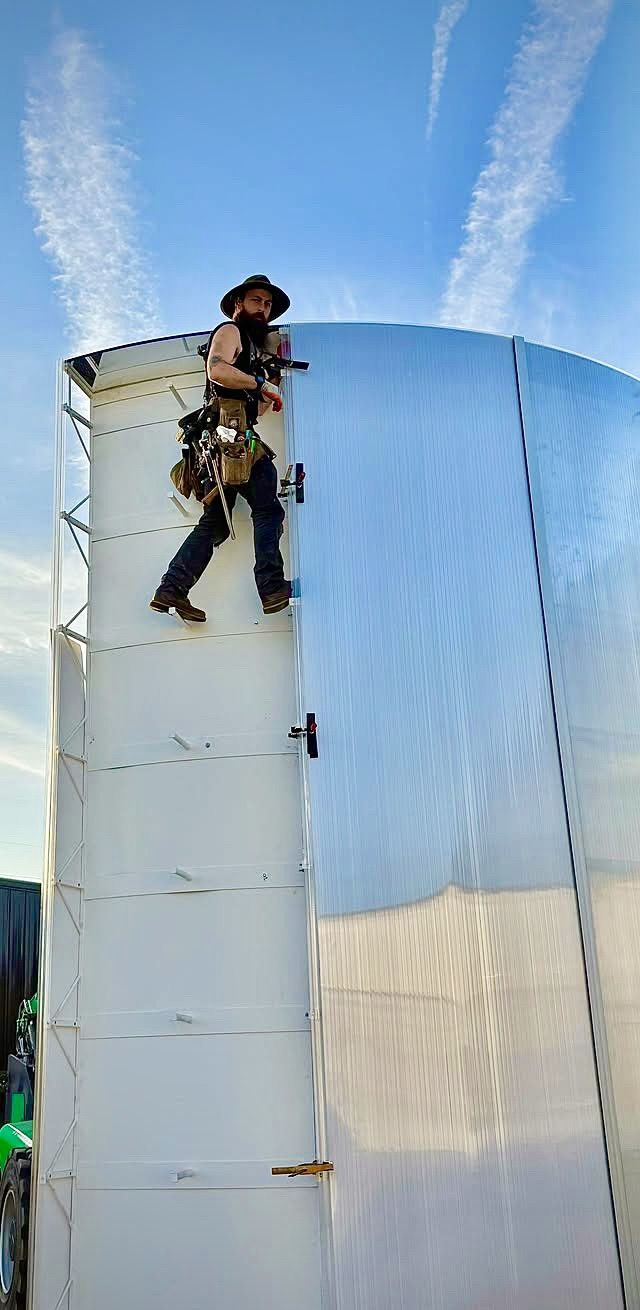
As evening fell, the lantern was lifted thirty-five feet in the air, then illuminated and evaluated from multiple locations. Some members of the project team remained near the mockup while others relocated to a nearby overpass to see how it would read from a greater distance. What looked successful from twenty feet away might appear entirely different from hundreds of feet away, and the only way to know for certain was to test it.
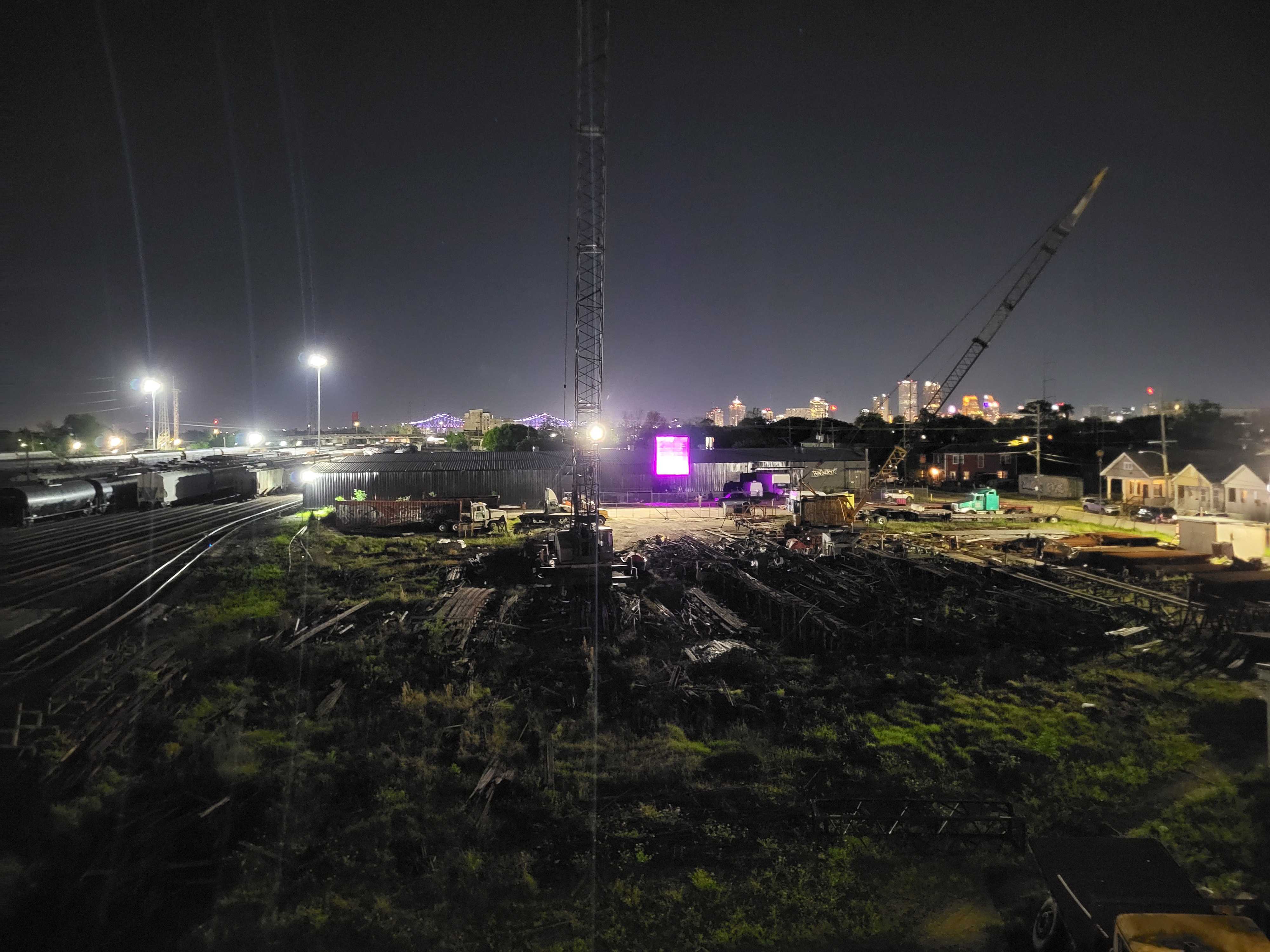
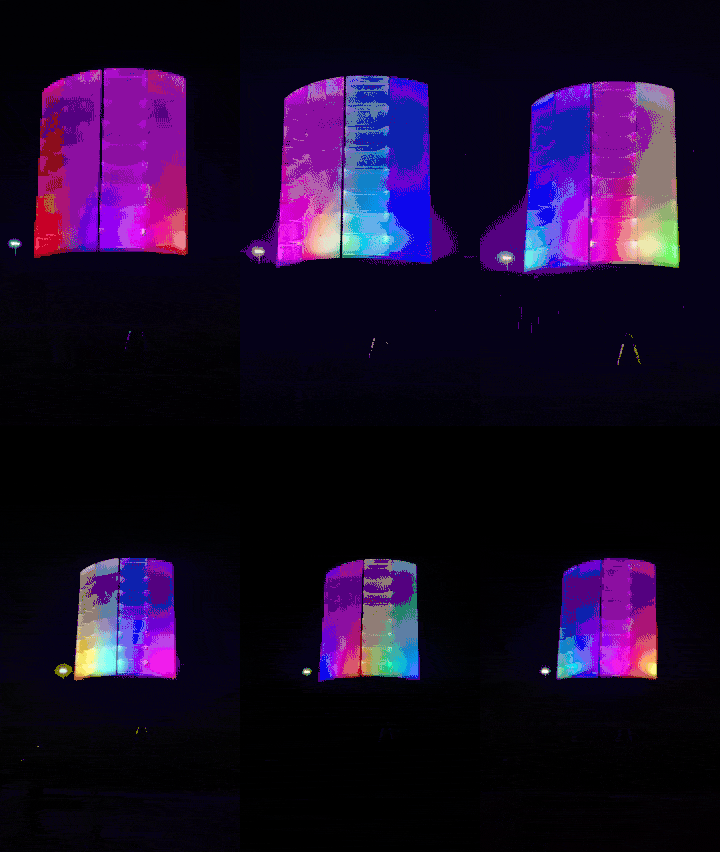
Ultimately, this review process was so successful that another planned visit the next day became unnecessary. Live Nation's teams had the information they needed; this new invention was clearly ready to rock ‘n roll.
From Experiment to Permanent Installation
The prototype phase was a home run; it answered the questions we had set out to answer, and as the project moved into fabrication, Live Nation chose to keep us involved for the next chapter. At this juncture, they could have taken the plans and had these lanterns built by anyone, but having developed, tested, and refined the lantern system together, there was value in carrying that knowledge and collaboration forward into production.
Our fabrication phase officially kicked off in the summer of 2025 and involved close coordination with a large number of project partners, including Generator Studio (the architects behind the venue’s striking designs), ARCO Construction, STAND Structural Engineering, Doherty Steel, Bandit Lites, and numerous others working toward the same goal.
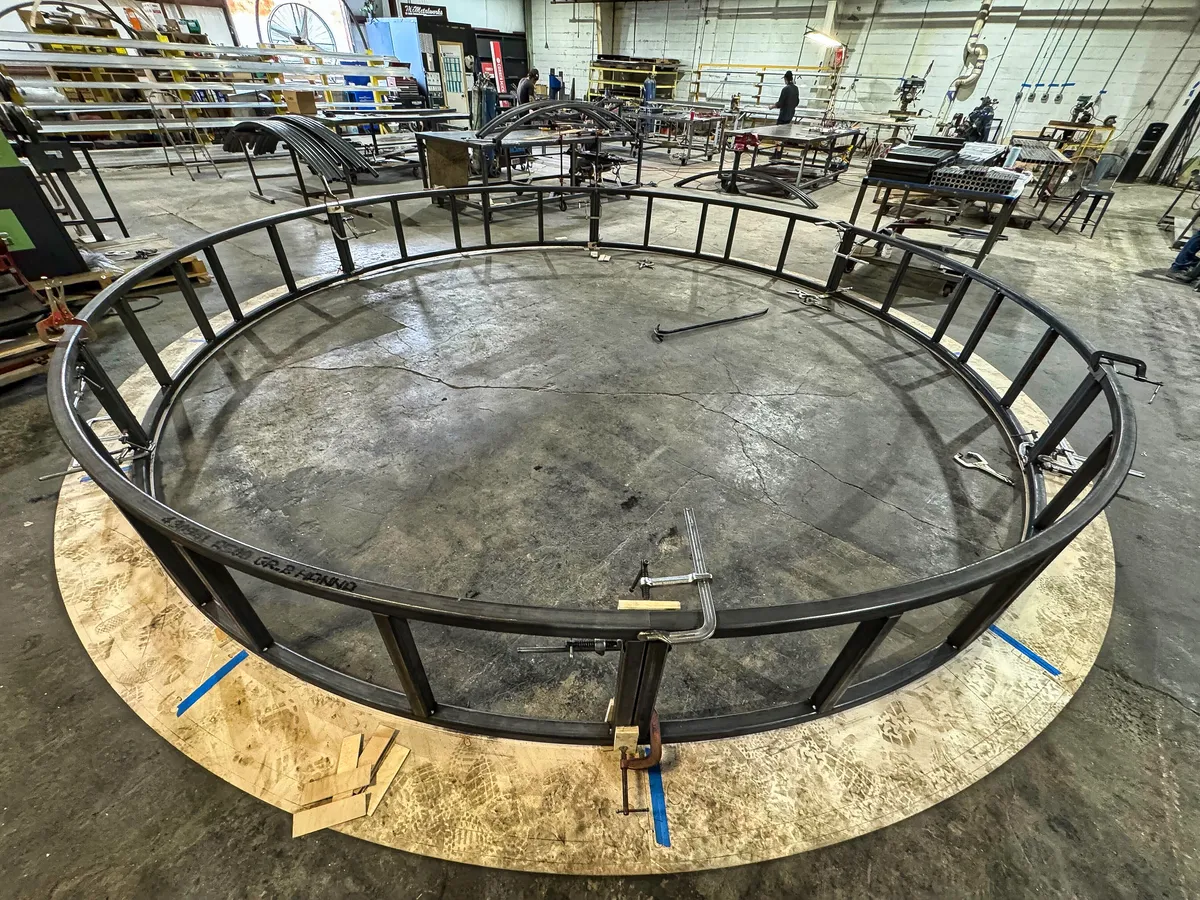
One of the most important design evolutions in our shop happened before we even began cutting steel. Because our lantern assemblies needed to attach to the “super structure” built and installed by Doherty, our Technical Design team developed a framing system built around curved ring trusses that improved repeatability in the shop while allowing for adjustments in the field. It's this kind of behind-the-scenes refinement that helps complex projects come together more smoothly once construction begins.
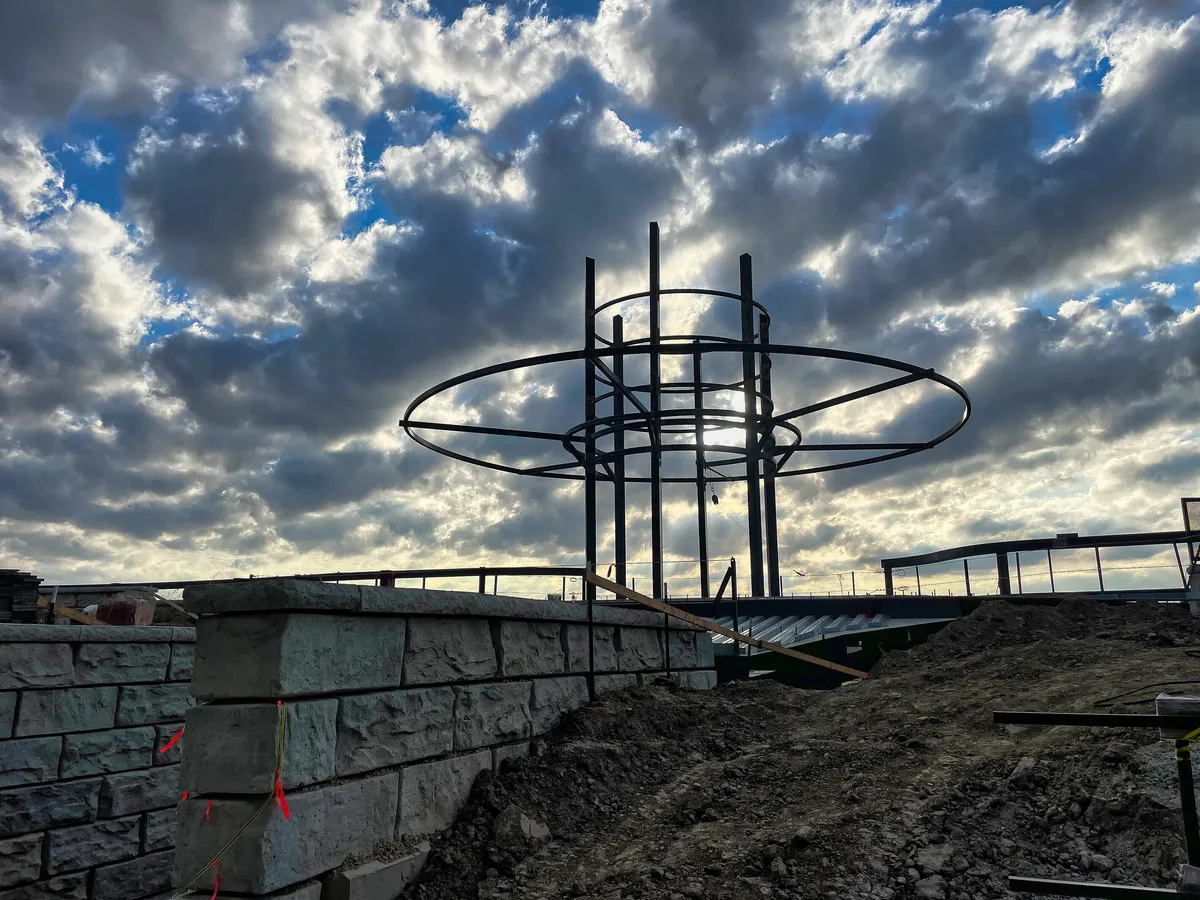
Ring truss components were plasma cut, welded, mocked up in our shop, then sandblasted, finished, and prepared for installation. At the end of the day, the completed lantern systems weigh roughly 5,000 pounds, so careful coordination between fabrication teams, engineers, and field crews was required to get them safely and securely settled into their final homes up in the sky.
By the time the lanterns arrived on site, they represented months of testing, revisions, engineering, fabrication, and collaboration. Visitors at Morton Amphitheater will likely experience them much differently. They'll simply see two lanterns, and honestly, that's exactly how it should be–the best fabrication often disappears into the experience.
Permanence, Production, and Everything In Between
Projects like these occupy an unusual position within our industry because they resist easy categorization into either architectural fabrication or scenic fabrication. The lanterns are architectural features in every practical sense: they are engineered, permanent, code-conscious structures that must perform reliably over time. Yet they are also undeniably scenic because their purpose extends beyond utility into atmosphere, experience and identity of the venue. They exist not merely to occupy space, but to shape the way people feel as they move through it.
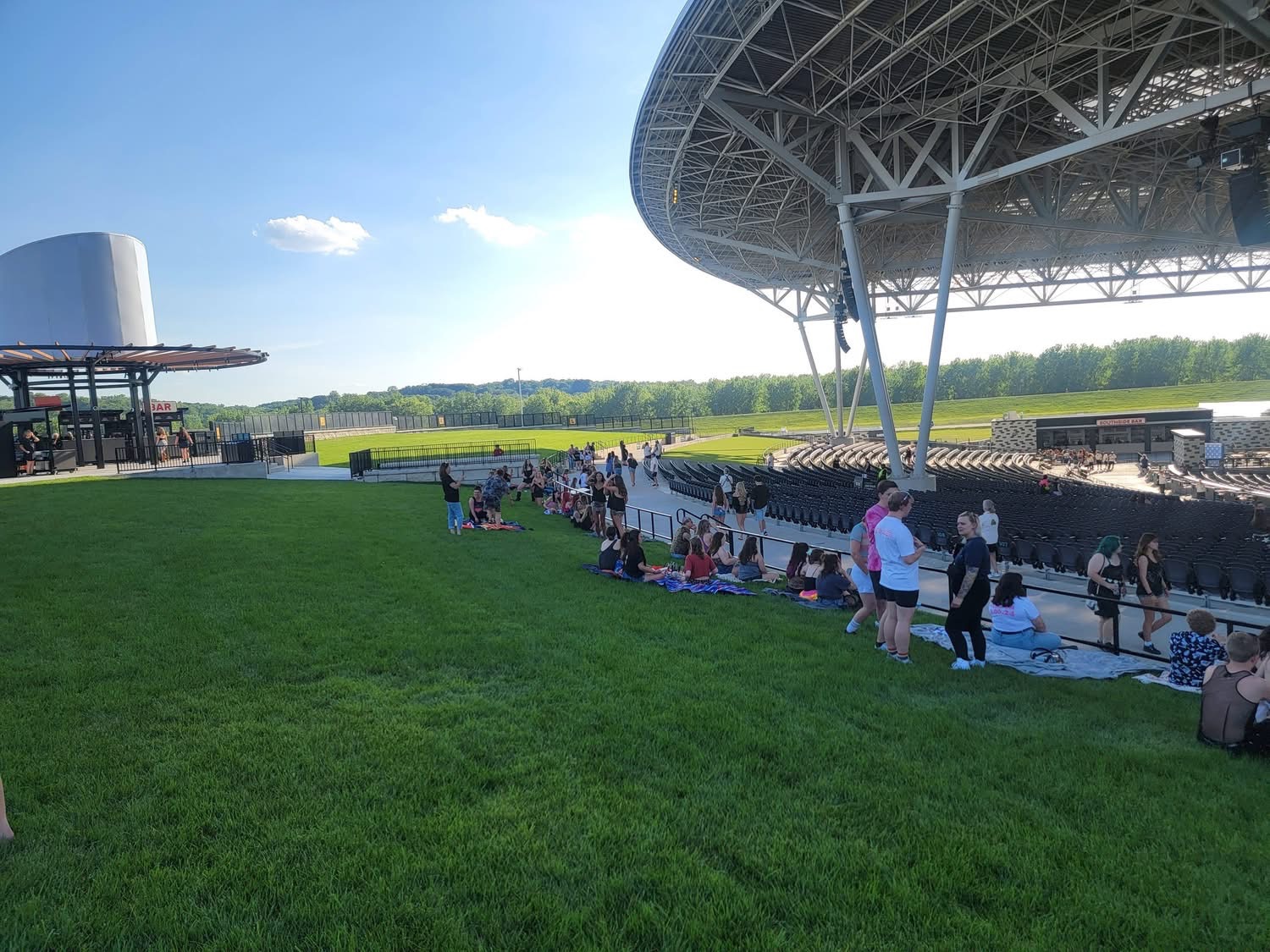
That intersection between architecture and experience is one of the reasons we find venue projects so compelling. Concerts are temporary. The environments that surround them are not. Thoughtful design and fabrication has the ability to influence a guest's experience before the music begins and long after the final encore ends.
More Venue Details to Discover In Person
Here’s a little insider tip for those who have made it this far: the lanterns weren't our only contribution to Morton Amphitheater.
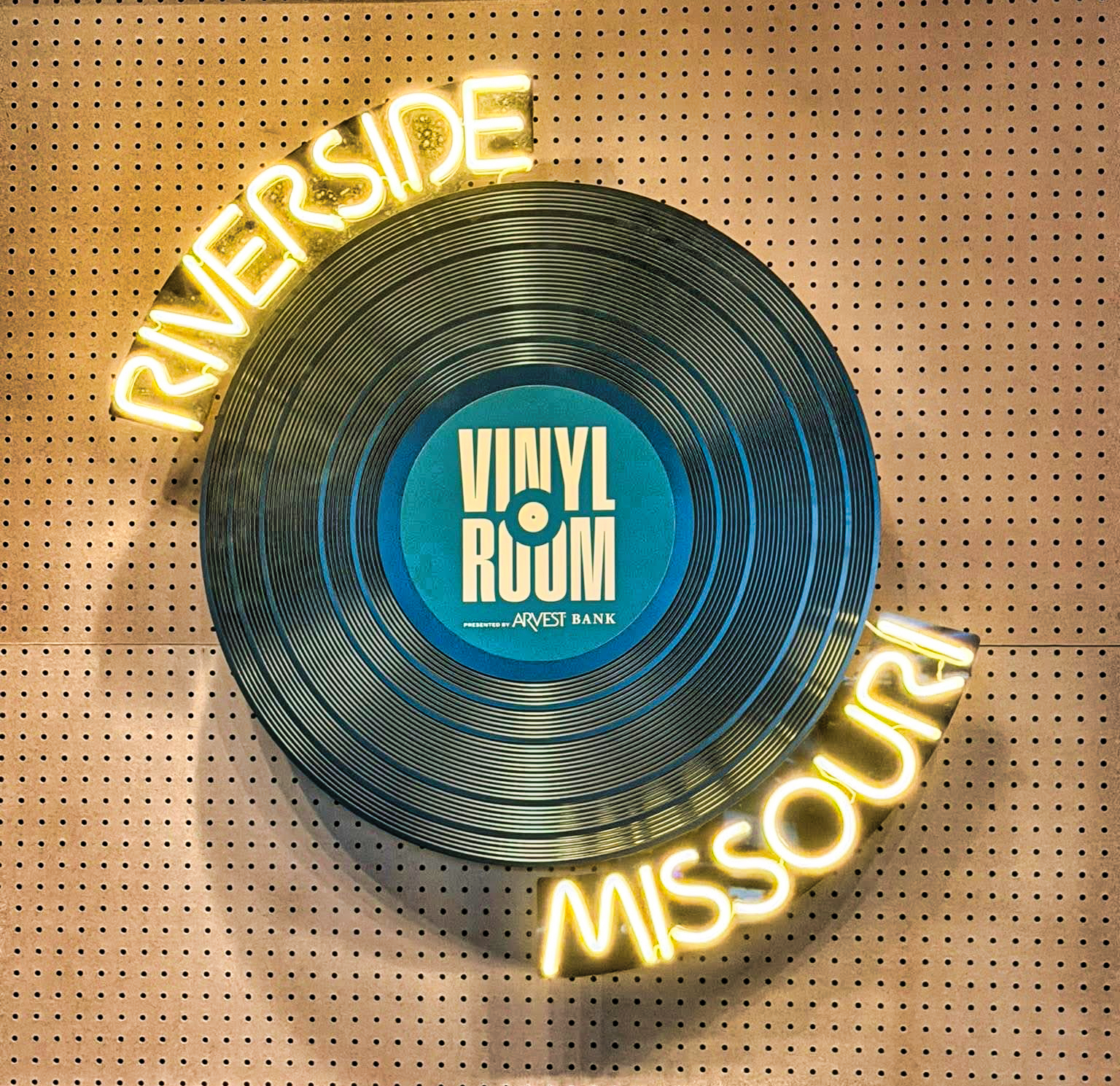
Guests who find themselves inside the venue's Vinyl Room may notice another fabrication easter egg from our team: custom record-inspired tabletops developed for the premium listening lounge. Live Nation has been introducing their Vinyl Rooms at select venues around the country as elevated VIP spaces that celebrate music culture through curated design, exclusive amenities, and a listening-focused atmosphere.
We're currently fabricating similar custom tabletops for multiple Live Nation venues, and Morton Amphitheater won’t be the only place where visitors can experience them in person. But if you’re in Kansas City, we guarantee the vibes in those spaces are on point and definitely worth the upgrade.
Opening Night & Beyond
As the first audiences make their way through Morton Amphitheater this season, they'll encounter the finished version of a project that began long before opening night. Before the lanterns were attached to their “super structure” and illuminated for thousands to experience, a parking lot prototype had to dangle three stories in the air for a group of designers, fabricators, engineers, and lighting specialists to study it from an overpass to see if the idea was working.
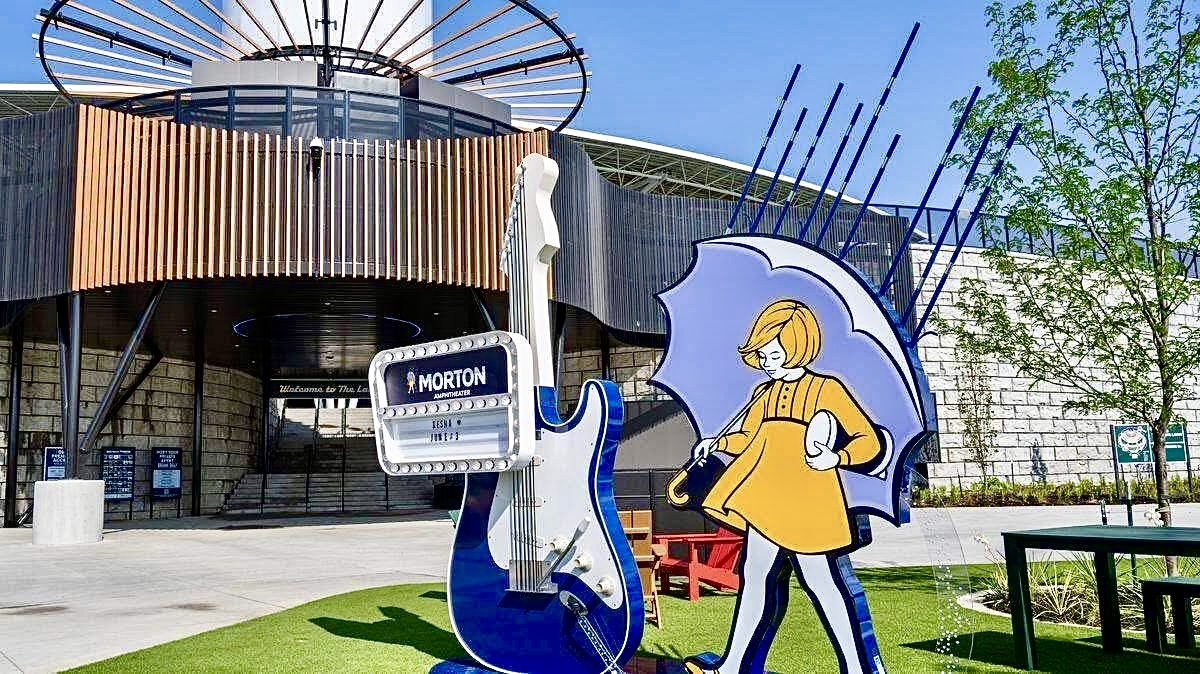
We're grateful to have played a part in bringing that idea to life and to have collaborated with so many talented partners along the way. For us, this project tapped into the fun side of custom fabrication—the finished piece may look effortless, but behind every successful project is a long trail of prototypes, problem-solving, and the occasional parking lot science experiment.
_____________________________________
If you’re like most of our clients, you’ve got tons of ideas and sketches that just need a little real-world know-how to become a reality. Let our team of fabrication nerds help you get your prototype experiment going–give us a shout today!



Ryan McDonald

Jordan Schwartz

Paul Utterback

Mike Cassesi

Scott Beelman

Irina Gusin

Kristen Kain
who we
Work with